Comparison
Peloton vs Echelon
A detailed head-to-head comparison of Peloton and Echelon covering ride quality, class content, build, and total cost of ownership.
Last updated: March 2026
Peloton changed the home cycling game, but it is no longer the only serious option. The Peloton Bike starts at $1,445 and the Bike+ runs $2,495, with both requiring a $44/month All-Access Membership to unlock the full experience. Over three years, you are looking at $3,029 to $4,079 in total cost. That is a lot of money to ride a stationary bike in your living room.
Whether you are priced out by the hardware, frustrated by the mandatory subscription, or simply want features Peloton does not offer, like real power meter data, automatic incline, or the freedom to use any cycling app you want, there are excellent alternatives that deliver a comparable or even superior experience for significantly less money. We tested over a dozen indoor bikes in our studio and narrowed it down to the five best Peloton alternatives you can buy in 2026.
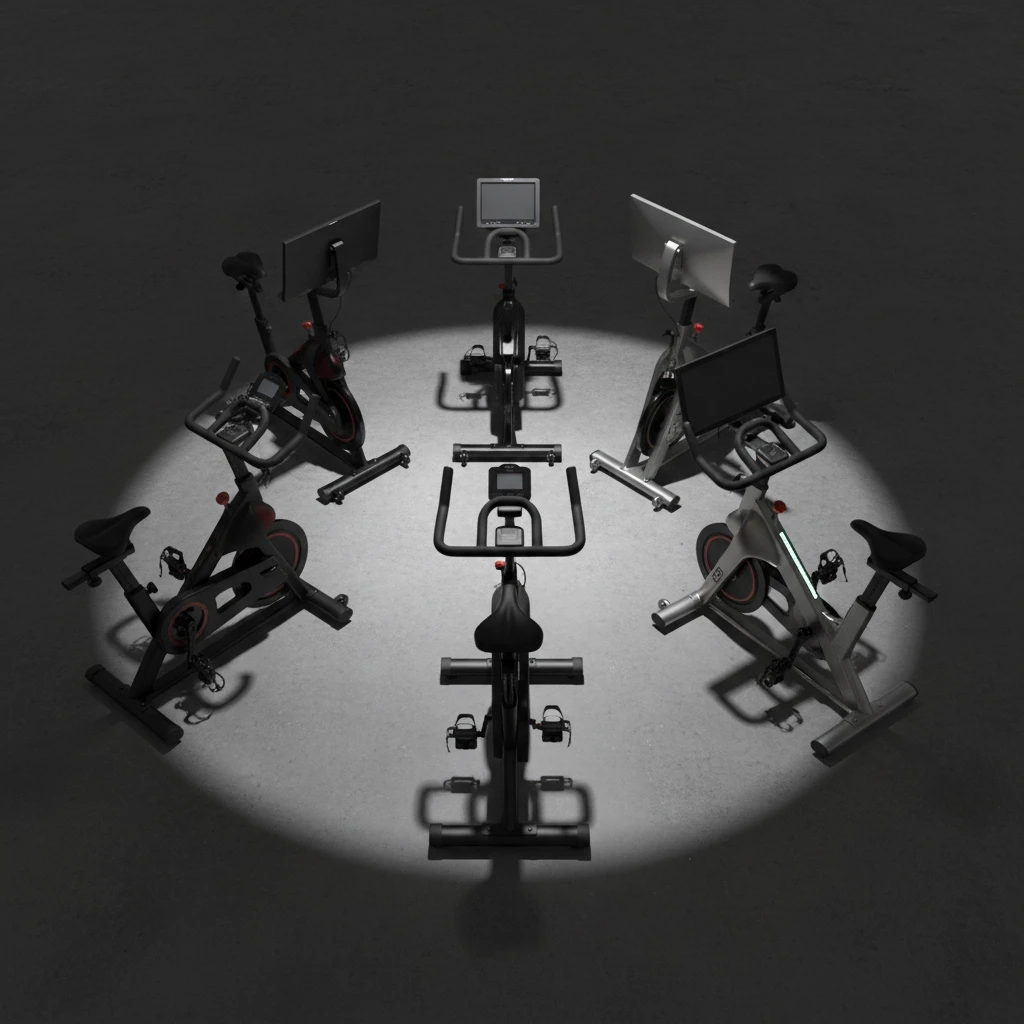
The closest thing to a Peloton without actually buying one. A 21.5-inch touchscreen, competitive class library, and solid build quality at roughly half the price of a Peloton Bike+. The best all-around Peloton replacement for most riders.
$839 + $34.99/mo membership
Read Full ReviewA rock-solid indoor bike that pairs with the Peloton app, Zwift, Apple Fitness+, and dozens of other platforms. No built-in screen keeps the price low, and the ride quality rivals bikes costing twice as much. Bring your own tablet and subscription, or ride without one entirely.
$799, no required subscription
Read Full ReviewThe bike you will find in elite cycling studios and Olympic training centers. Commercial-grade magnetic resistance, a whisper-quiet rear flywheel, and built-in Bluetooth power tracking make it the gold standard for serious cyclists who care about performance data over flashy screens.
$2,195, no required subscription
Read Full ReviewHere is how every alternative stacks up against the Peloton Bike on the specs that matter most. We included the Peloton Bike as a baseline so you can see exactly where each competitor wins and loses.
| Spec | Peloton Bike (Reference) | Echelon EX-5s | Schwinn IC4 | Keiser M3i | NordicTrack S22i | Bowflex VeloCore |
|---|---|---|---|---|---|---|
| Price | $1,445 | $839 | $799 | $2,195 | $1,999 | $799 – $1,699 |
| Monthly Fee | $44/mo (required) | $34.99/mo (optional) | None required | None required | $39/mo iFit (optional) | $24.99/mo JRNY (optional) |
| Screen | 21.5" HD touchscreen | 21.5" HD touchscreen | None (tablet holder) | None (tablet holder) | 22" HD rotating touchscreen | 16" or 22" HD touchscreen |
| Resistance | Magnetic, 100 levels | Magnetic, 32 levels | Magnetic, 100 micro-levels | Magnetic, 24 levels | Magnetic, 24 digital levels | Magnetic, 100 micro-levels |
| Flywheel | Front, undisclosed weight | Front, undisclosed weight | Front, 40 lbs | Rear, 8 lbs (magnetic) | Front, 32 lbs | Front, 35 lbs |
| Drive | Belt | Belt | Belt | Belt (Poly-V) | Belt | Belt |
| Incline/Decline | No | No | No | No | -10% to +20% automatic | No (leaning frame instead) |
| Power Meter | Estimated output | Estimated output | No (cadence only via Bluetooth) | Yes, Bluetooth power meter | Estimated output | No (cadence only) |
| Weight Capacity | 297 lbs | 300 lbs | 330 lbs | 350 lbs | 350 lbs | 325 lbs |
| Bike Weight | 135 lbs | 106 lbs | 106 lbs | 85 lbs | 143 lbs | 135 – 154 lbs |
| Warranty | 5-yr frame, 1-yr parts | 5-yr frame, 1-yr parts | 10-yr frame, 2-yr parts | 10-yr frame, 3-yr parts | 10-yr frame, 2-yr parts | 10-yr frame, 3-yr parts |
Price: $839 + $34.99/mo | Our rating: 8.7/10
If you want the closest possible experience to a Peloton without the Peloton price tag, the Echelon EX-5s is the bike to buy. It mirrors the Peloton formula almost exactly: a 21.5-inch HD touchscreen, magnetic resistance, a belt drive for near-silent pedaling, and a growing library of live and on-demand classes led by charismatic instructors. The difference is that the EX-5s costs $839 versus $1,445 for the Peloton Bike, and the subscription runs $34.99/month instead of $44.
In our testing, the ride quality of the EX-5s was genuinely impressive for the price. The magnetic resistance transitions are smooth, the frame feels stable during out-of-saddle efforts, and the overall build does not have the wobble or creak that we associate with sub-$1,000 bikes. The touchscreen is responsive and bright enough for a well-lit room, though it does not quite match the Peloton display's color accuracy.
Echelon's class library has matured significantly. There are now thousands of on-demand rides across cycling, strength, yoga, and stretching, plus live classes throughout the day. Instructor quality is solid. It is not quite at Peloton's polished production level, but the gap has closed considerably since Echelon first launched. The leaderboard and community features are there, too, though the user base is smaller.
The biggest practical advantage over Peloton is that the EX-5s actually functions without a subscription. You can ride in manual mode using the resistance knob and your own metrics. With Peloton, the bike becomes essentially a clothing rack without the $44/month All-Access plan.
Price: $799–$999, no required subscription | Our rating: 8.4/10
The Schwinn IC4 (sold as the IC8 in some markets) is the best value proposition in indoor cycling, period. For $799, you get a bike with 100 micro-adjustable magnetic resistance levels, a smooth belt drive, Bluetooth heart rate and cadence broadcasting, and compatibility with virtually every cycling app on the market, including the Peloton app, Zwift, Apple Fitness+, Kinomap, and more.
There is no built-in screen, and that is actually the point. Instead of locking you into one ecosystem, the IC4 gives you a device holder and lets you bring your own tablet or phone. Want to use the Peloton app this month, try Zwift next month, and switch to Apple Fitness+ after that? Go for it. This flexibility is something no screen-integrated bike can match.
The ride quality is outstanding for the price. The 40-lb flywheel delivers a smooth, road-like pedaling feel, and the 100 resistance levels give you granular control that many more expensive bikes lack. The frame is sturdy with a 330-lb weight capacity, and Schwinn backs it with an industry-leading 10-year frame warranty. That alone tells you something about the build confidence.
The IC4 is also one of the quietest bikes we have tested. In our sound measurements, it registered under 50 dB at moderate resistance, which means you can ride at 5 AM without waking anyone in the next room.
The downside is the lack of integration. Without a built-in screen, the experience feels less seamless than Peloton or Echelon. You are managing your own apps, propping up your own tablet, and there is no automatic resistance control synced to class callouts. For some riders, that is a dealbreaker. For others, the freedom and cost savings more than make up for it.
Price: $2,195, no required subscription | Our rating: 9.2/10
The Keiser M3i is not trying to be a Peloton. It is trying to be the best indoor cycling bike ever made, and it largely succeeds. This is the bike you will find in SoulCycle studios, Equinox spinning rooms, and Olympic training facilities around the world. If Peloton is the iPhone of indoor cycling, the M3i is a Swiss mechanical watch: no flashy screen, no leaderboard gamification, just exceptional engineering focused on the ride itself.
The defining feature is Keiser's rear flywheel design with magnetic resistance. Unlike front-flywheel bikes (including Peloton) where a heavy spinning mass creates momentum that can mask sloppy pedaling, the M3i's lighter rear flywheel combined with precise magnetic resistance forces you to generate power through the entire pedal stroke. The result is a ride feel that is noticeably closer to riding a real road bike. Serious cyclists feel the difference immediately.
The built-in Bluetooth power meter is another game-changer. The M3i broadcasts actual wattage data, not estimated output, which means your power numbers are accurate enough to build structured training plans around. Pair it with Zwift, TrainerRoad, or Strava, and you have a legitimate indoor training tool that rivals dedicated smart trainers costing $1,000+ on their own.
Build quality is commercial-grade because it literally is a commercial product. The frame is corrosion-resistant aluminum, the V-shaped frame design eliminates sweat pooling on critical components, and Keiser offers a 10-year frame / 3-year parts warranty that reflects genuine durability. At 85 lbs, it is also the lightest bike on this list, making it easy to move around.
The obvious tradeoff is the complete lack of built-in content. There is no screen, no classes, no instructors, and no community features. You get a small backlit computer display that shows your power, cadence, heart rate, and ride time. That is it. For self-motivated cyclists who live by their power numbers, this is perfect. For riders who need instructor energy and leaderboard competition to stay engaged, this bike will feel empty.
Price: $1,999 + $39/mo iFit | Our rating: 8.5/10
The NordicTrack S22i does something no Peloton can: it physically changes the angle of the bike during your ride. With automatic incline from -10% to +20%, the S22i tilts your body to simulate climbing and descending, which fundamentally changes the training stimulus compared to a flat-only bike. When an iFit trainer takes you up a mountain pass in the French Alps and the bike tilts upward beneath you, the immersion is genuinely impressive.
That incline capability is the S22i's killer feature, and iFit's content library is designed to exploit it. iFit offers thousands of on-demand rides filmed on location around the world, from the roads of Tuscany to the trails of Moab. The trainers control your resistance and incline in real time during these rides, which means you just pedal and they handle the programming. The 22-inch touchscreen rotates 180 degrees for off-bike workouts, and the display quality is sharp and responsive.
Build quality is solid. The 32-lb flywheel delivers a smooth ride, and the frame handles the mechanical stress of constant incline/decline changes without wobbling. The weight capacity of 350 lbs is among the highest on this list. At 143 lbs, the S22i is the heaviest bike here, so plan on assembling it where it will live permanently.
The main criticism is the iFit dependency. While the bike technically works without a subscription, you lose the automatic incline adjustments, the global ride library, and most of what makes the S22i special. NordicTrack has also been aggressive about locking features behind the paywall, which has frustrated some owners. At $39/month, the subscription is cheaper than Peloton's, but it is still a significant ongoing cost.
Price: $799–$1,699 + $24.99/mo JRNY | Our rating: 8.1/10
Every other bike on this list keeps you locked in a fixed upright position. The Bowflex VeloCore does not. Its patented leaning frame lets the bike tilt left and right as you pedal, engaging your core and obliques in a way that static bikes simply cannot. It sounds like a gimmick. It is not. After a 45-minute leaning ride, you feel the difference in your midsection the next day.
The VeloCore comes in two versions: a 16-inch screen model at $799 and a 22-inch screen model at $1,699. Both feature 100 micro-adjustable magnetic resistance levels, a smooth belt drive, and the same leaning mechanism. You can lock the lean feature off if you want a traditional stationary ride, which makes it a two-in-one bike.
Bowflex's JRNY platform is the content backbone. It offers adaptive workouts that adjust difficulty based on your fitness level, coaching cues during rides, and a growing library of instructor-led classes. JRNY also integrates with Netflix, Hulu, Disney+, and Amazon Prime Video, letting you stream entertainment on the bike's screen while still tracking your metrics. At $24.99/month, it is the cheapest touchscreen-integrated subscription on this list.
The ride quality is good but not great. The leaning mechanism introduces a slight wobble that some riders find distracting, especially at higher cadences during sprint intervals. The frame stabilizes well at moderate efforts, but if you are an aggressive out-of-saddle rider, you may prefer the planted feel of a traditional frame. The lean also means the VeloCore has a larger footprint than a standard bike, since it needs clearance space on both sides.
We evaluated over a dozen indoor cycling bikes across six weighted criteria to find the best Peloton alternatives. Every bike on this list was tested in our studio by multiple riders of different fitness levels, heights, and riding styles over a minimum of four weeks.
Yes, you can use the Peloton app on any indoor cycling bike by subscribing to the Peloton App membership for $12.99 per month. You will get access to all of Peloton's on-demand and live classes, but you will not see live resistance callouts synced to your bike. Bikes with Bluetooth like the Schwinn IC4 can broadcast cadence and heart rate data to the app, giving you a close approximation of the full Peloton experience at a fraction of the hardware cost.
The Schwinn IC4 at $799 is the cheapest alternative that still delivers a genuinely premium ride feel. It features 100 micro-adjustable magnetic resistance levels, a smooth and quiet belt drive, and Bluetooth connectivity that lets you pair it with the Peloton app, Zwift, or Apple Fitness+. The build quality and ride feel punch well above its price point, and the lack of a mandatory subscription means your ongoing costs stay low.
The Echelon EX-5s delivers about 90% of the Peloton experience at roughly 55% of the cost. The hardware quality is solid, the 21.5-inch touchscreen is sharp, and the class library has grown significantly. Where it falls slightly short is instructor charisma and production value, which is subjective but noticeable if you are coming from Peloton. The ride feel itself is comparable, and for most riders the savings far outweigh the minor differences.
It depends on the bike. The Keiser M3i and Schwinn IC4 work perfectly well without any subscription at all since they are traditional spin bikes with Bluetooth connectivity. You can pair them with free apps or use them fully offline. The Echelon EX-5s, NordicTrack S22i, and Bowflex VeloCore all have optional subscriptions that unlock their full content libraries, but unlike Peloton, these bikes remain functional for manual rides without paying monthly fees.
The Keiser M3i is the best Peloton alternative for serious cyclists. It is the same bike used in high-end cycling studios and Olympic training facilities worldwide. The magnetic resistance is incredibly smooth, the rear flywheel design eliminates the inertia-heavy feel of cheaper bikes, and the built-in Bluetooth power meter provides accurate watt data that syncs with apps like Zwift, TrainerRoad, and Strava. If you care about power-based training and true cycling performance, the M3i is in a different league.
A detailed head-to-head comparison of Peloton and Echelon covering ride quality, class content, build, and total cost of ownership.
Not sure if the Bike+ upgrade is worth $1,050 more? We break down every difference to help you decide which Peloton to buy.
Our complete ranking of the best exercise bikes at every price point, from budget spin bikes to high-end smart trainers.