Comparison
REP PR-4000 vs PR-5000
A detailed head-to-head comparison of REP's two best power racks. Which one is right for your home gym and budget?
Read ComparisonDigital Gym is reader-supported. When you buy through links on our site, we may earn an affiliate commission at no extra cost to you. Learn more
Last updated: March 2026
A power rack is the foundation of any serious home gym. We spent months testing the most popular racks on the market, evaluating steel gauge, hole spacing precision, attachment ecosystems, stability under load, and long-term value. We loaded each rack well beyond typical training weights, measured wobble and flex with dial indicators, and tested dozens of attachments for fit and compatibility. The result is this ranked list of the five power racks that actually deserve your money in 2026 — plus honest notes on where each one compromises.
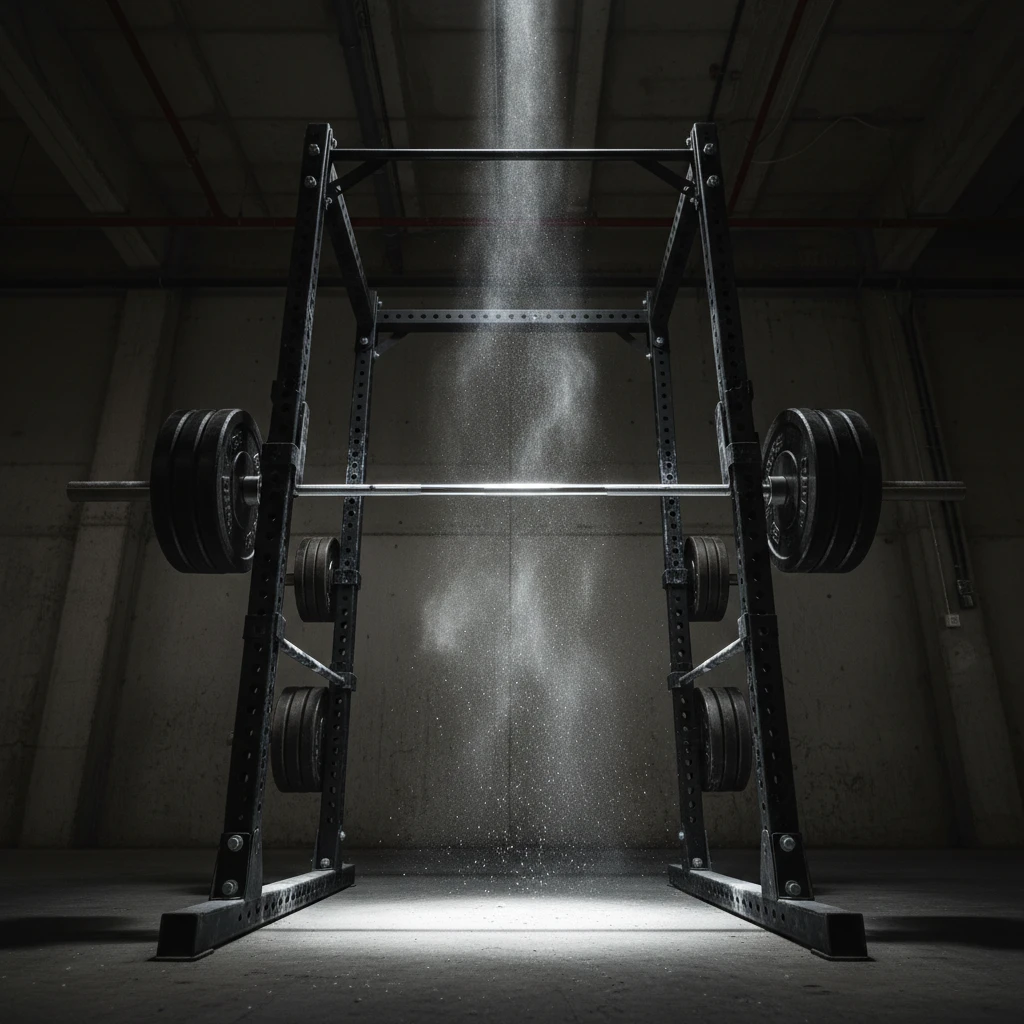
4-way compatible uprights, premium powder coat, and the deepest attachment ecosystem in the category. The rack most home gym owners should buy.
90% of the PR-5000's performance at roughly 70% of the price. The best power rack under $700 you can buy right now.
A legitimate 3x3 rack for under $600. No floor bolts needed, surprisingly solid build quality, and Titan's growing attachment lineup makes it easy to expand over time.
Every key spec in one place so you can compare at a glance before diving into the individual reviews.
| Rack | Price (Base) | Upright Size | Hole Size | Hole Spacing | Depth | Footprint | Made In | Our Rating |
|---|---|---|---|---|---|---|---|---|
| REP PR-5000 | $899 | 3x3" | 5/8" & 1" | Westside | 24" or 30" | 49" W x 48" D | China | 9.4/10 |
| Rogue RML-490C | ~$1,595 | 3x3" | 5/8" | Westside | 24" or 30" | 53" W x 53" D | USA | 9.2/10 |
| REP PR-4000 | $621 | 3x3" | 5/8" | Westside | 24" or 30" | 49" W x 48" D | China | 9.0/10 |
| Titan X-3 Flatfoot | $450–$600 | 3x3" | 5/8" | Westside | 24" | 48" W x 50" D | China | 8.5/10 |
| Rogue RML-390F | $695 | 3x3" | 5/8" | Westside | 24" | 53" W x 50" D | USA | 8.8/10 |
Editor's Choice: The most versatile power rack for home gym owners who want to build a complete setup over time
The REP PR-5000 is the power rack we recommend to most home gym owners, and it is not particularly close. What puts it ahead of the field is its 4-way compatible upright design: attachments can mount on the front, back, left, and right sides of every upright, which gives you significantly more layout flexibility than the typical front-and-back-only design. Want a lat pulldown on the left, a dip station on the right, and spotter arms on the front? No problem. That 4-way system turns a single rack into a genuinely modular training station.
The steel is 11-gauge 3x3-inch with both 5/8-inch and 1-inch holes, which means the PR-5000 accepts the widest range of third-party attachments of any rack we tested. Westside hole spacing (1 inch apart) runs through the entire bench zone, and the powder coat finish is noticeably better than anything in this price range — smooth, consistent, and resistant to chipping even after months of use with knurled barbells.
REP's attachment ecosystem is enormous: lat pulldowns, cable crossovers, dip horns, landmine posts, belt squat adapters, monolift arms, and more. You can buy the base rack for $899 and add pieces over time as your budget and training needs evolve. We configured a PR-5000 with a lat/low row, safety straps, and sandwich J-cups for about $1,350 total — which is still hundreds less than a comparably equipped Rogue.
Where the PR-5000 falls short: it ships from REP's Colorado warehouse and shipping costs can be significant depending on your location ($100-$200+). Assembly takes 2-3 hours and the instructions, while adequate, could be clearer. And while the build quality is excellent for the price, the welds and hardware are not quite at Rogue's level of obsessive precision. But for the vast majority of home gym owners, the PR-5000 offers the best combination of quality, versatility, and value available today.
For a detailed breakdown of how this rack compares to its sibling, see our REP PR-4000 vs PR-5000 comparison.
Made in the USA, lifetime warranty, and the kind of build quality you can feel the moment you touch it
If you have the budget and want a rack you will never need to replace, the Rogue RML-490C is the one. Built entirely in Columbus, Ohio, the 490C is Rogue's full four-post power rack in the Monster Lite line — 3x3-inch 11-gauge steel with 5/8-inch holes and Westside spacing through the bench zone. The build quality is exceptional. Every weld is clean, every hole is precisely drilled, and the hardware is Rogue's proprietary stuff that fits with zero slop. You can feel the difference the moment you rack a barbell.
The "C" in RML-490C stands for the conversion kit compatibility: this rack can be expanded with Rogue's extensive Monster Lite attachment line, including their Slinger cable system, Matador dip attachment, Monster Lite safety straps, and dozens of other accessories. The Rogue ecosystem is the largest and most mature in the industry, and there is a thriving secondary market if you ever want to sell or trade accessories.
Rogue backs the RML-490C with a lifetime warranty against structural defects and a finish warranty that is the most generous we have seen. Customer service is US-based and responsive. Shipping is typically fast from their Ohio facility, and the rack arrives well-packaged with clear, numbered hardware bags — assembly is straightforward for anyone with a socket wrench and a couple of hours.
The downside is simple: price. At roughly $1,595 for the base rack (no J-cups, no safeties — those are extra), a fully configured RML-490C with safety straps, sandwich J-cups, and a pull-up bar will run you well over $2,000. That is nearly double what a comparably equipped REP PR-5000 costs, and the performance gap does not justify that premium for most people. The Rogue tax is real. But if you value American manufacturing, a lifetime warranty, and the knowledge that your rack is built to a standard that professional gyms rely on, the RML-490C delivers.
See how Rogue stacks up against its biggest budget competitor in our Rogue vs Titan comparison.
The sweet spot: 3x3 build quality and a deep attachment ecosystem at a price that leaves room in the budget for plates and a bench
The REP PR-4000 is the rack we recommend most often to people building their first serious home gym. At $621, it delivers the same 3x3-inch 11-gauge steel uprights and Westside hole spacing as racks costing hundreds more, and it is compatible with the vast majority of REP's attachment ecosystem. If you are not sure whether you need the PR-5000's 4-way uprights, start here — you will save nearly $300 and still get an outstanding rack.
The PR-4000 uses standard 5/8-inch holes on 3x3-inch uprights, which is the most common specification in the home gym industry. That means it is compatible not only with REP's own attachments but also with many third-party accessories designed for 3x3 5/8-inch racks. We tested J-cups, safety straps, dip attachments, and a lat pulldown from multiple brands and everything fit cleanly. The attachment compatibility alone makes this rack a strong pick — you are not locked into a single brand's ecosystem.
Build quality is genuinely impressive for the price. The powder coat is smooth and durable (REP offers several color options), the holes are cleanly drilled with no burrs, and the rack showed zero measurable wobble under a 500 lb squat load with band tension. We have seen racks costing $300 more that do not feel this solid. Height options include 80-inch and 93-inch versions, and depth options of 24 or 30 inches let you choose based on your available space and whether you plan to squat inside or outside the rack.
Where the PR-4000 gives ground to the PR-5000: it only accepts attachments on the front and back of the uprights (not all four sides), and it lacks the dual 5/8-inch and 1-inch hole compatibility. For most home gym owners, neither of these limitations matters in daily training. But if you are planning a complex multi-attachment setup, the PR-5000's 4-way system is worth the upgrade. For everyone else, the PR-4000 is a tremendous value.
For the full head-to-head breakdown, read our REP PR-4000 vs PR-5000 comparison.
A legitimate 3x3 rack at budget pricing, with no floor bolts required
The Titan X-3 Flatfoot is the rack that proves you do not need to spend $900+ to get a solid, functional power rack. Starting around $450 for the short (82-inch) version, the X-3 gives you 3x3-inch uprights with 5/8-inch holes and Westside hole spacing — the same core specs as racks costing nearly double. The flatfoot design means extended rear feet keep the rack stable without bolting to the floor, which is a major advantage for renters, garage gym owners, and anyone who does not want to drill into concrete.
Titan has historically taken criticism for inconsistent quality control, and some of that criticism is fair. We have seen reports of misaligned holes, rough powder coat, and hardware that arrives with minor cosmetic damage. Our test unit had a couple of small paint chips on arrival and one pull-up bar bracket that needed light filing to fit flush. These are annoyances, not deal-breakers, and they are the reason a Titan costs $400 less than a Rogue.
What surprised us is how solid the X-3 felt once assembled. We loaded it to 600 lbs on squats and the rack showed minimal deflection — comparable to racks at twice the price. The flatfoot base eliminates any rocking, and with a few hundred pounds of plates on the storage posts, this rack is not going anywhere. Titan's attachment ecosystem has grown significantly in recent years, and most Titan X-3 accessories are cross-compatible with other 3x3 5/8-inch racks, giving you a wide selection of J-cups, safety straps, dip handles, and more.
The X-3 Flatfoot is the right pick if you are on a tight budget and want the most rack for your dollar. Just set your expectations on fit and finish: it is a budget rack, and it looks and feels like one up close. But where it counts — structural integrity, stability, and training functionality — the X-3 delivers.
See how Titan compares to Rogue across the full product line in our Rogue vs Titan comparison.
Rogue build quality in a flatfoot package — no bolts, no compromises on stability
The Rogue RML-390F takes the Monster Lite platform and puts it on a flatfoot base, giving you full Rogue build quality without the need to bolt into your floor. At $695 for the base unit, it sits in an interesting middle ground — significantly cheaper than the full RML-490C, but more expensive than the Titan X-3 Flatfoot. The question is whether the Rogue premium is worth it when you can get a flatfoot 3x3 rack for $200+ less.
After testing both, the answer is: it depends on what you value. The RML-390F's fit and finish are noticeably better than the Titan. Every hole lines up perfectly, the powder coat is thick and even, and the hardware drops in with zero resistance. There is a precision to Rogue's manufacturing that you can feel during assembly and every time you adjust a J-cup or set a safety strap height. The flatfoot base is wider and heavier than Titan's, which translates to slightly better stability under asymmetric loading.
The RML-390F is a half rack (two uprights with a crossmember and pull-up bar, plus the flatfoot base) rather than a full four-post cage like the 490C. That means you get a smaller footprint and easier access for exercises like barbell lunges and rack pulls, but you lose the enclosed cage feel and the option to mount accessories on rear uprights. If you want a full cage from Rogue in flatfoot configuration, you will need to look at the RML-490F, which runs closer to $1,400+.
For home gym owners who want Rogue quality, do not want to bolt to the floor, and are comfortable with a half-rack format, the RML-390F is an excellent choice. It shares full compatibility with Rogue's Monster Lite attachment line, which is the deepest in the industry, and it carries the same lifetime structural warranty. Made in Columbus, Ohio.
Buying a power rack is one of the most important decisions you will make for your home gym. Here are the key factors to evaluate before you spend a dollar.
Upright size determines two things: structural rigidity and attachment compatibility. Most budget racks use 2x3-inch uprights, which work fine for light to moderate loads but limit your attachment options significantly. The 3x3-inch upright is the industry standard for mid-range and premium racks, and every rack on our list uses this size. If you can afford it, go 3x3 — you will have access to a much broader attachment ecosystem and a rack that feels more stable under heavy loads.
Hole spacing determines how precisely you can position your J-cups and safety bars. Standard 2-inch spacing works, but Westside hole spacing — where holes are drilled 1 inch apart through the bench press zone (roughly 15 to 45 inches) — gives you twice the precision where it matters most. On bench press, even a half-inch change in bar height affects your setup, your unrack, and your safety bar positioning. All five racks on our list feature Westside spacing, and we would not recommend buying a rack without it.
Most home gym racks use 5/8-inch holes. This is the standard for the Rogue Monster Lite line, all of Titan's X-3 line, and REP's PR-4000. The REP PR-5000 stands out by offering both 5/8-inch and 1-inch holes, which gives it compatibility with a wider range of attachments including some from Rogue's Monster (not Monster Lite) line. Unless you specifically need 1-inch compatibility, 5/8-inch is the standard and the smart choice.
A power rack without attachments is just four posts and a pull-up bar. The real value comes from the accessories you can add over time: lat pulldowns, cable crossover systems, dip stations, safety straps, monolift arms, landmine posts, and more. Before you buy a rack, look at the attachment catalog from that brand. REP and Rogue offer the deepest ecosystems. Titan's is growing but more limited. Also consider cross-compatibility: 3x3 5/8-inch is the most universal specification, and many third-party manufacturers build accessories to fit this standard.
This is the factor most buyers overlook until it is too late. Measure your ceiling before you order. Most full-size racks are 90-93 inches tall, which means you need at least 96 inches (8 feet) of ceiling clearance — and that does not account for a pull-up bar on top. If your basement or garage ceiling is lower than 8 feet, look for short versions (80-82 inches) or racks with a low pull-up bar option. The REP PR-4000 and PR-5000 both offer 80-inch versions. The Titan X-3 Flatfoot comes in an 82-inch version.
Flatfoot racks use extended rear feet (and sometimes front feet) to create a stable base without drilling into your floor. This is ideal for renters, garage gyms over cracked concrete, or anyone who might move the rack later. Bolt-down racks connect directly to the floor via lag bolts, which gives them a slightly smaller footprint and marginally better rigidity under extreme loads. For home gym use with loads under 500 lbs, the stability difference is negligible. If you are not sure which you need, go flatfoot — you can always add plate storage to the feet for extra ballast, and you will not have to repair your floor if you move.
For most home gym owners, 3x3-inch uprights with 5/8-inch holes are the sweet spot. This is the most common size among mid-range and premium racks from REP, Rogue (Monster Lite line), and Titan (X-3 line), which means you get the widest selection of compatible attachments. Budget racks often use 2x3-inch uprights, which limits your attachment options. The 3x3 with 1-inch holes (Rogue Monster series) is overkill for home use and significantly more expensive.
Not necessarily. Flatfoot power racks like the Titan X-3 Flatfoot and Rogue RML-390F are designed to be stable without floor bolts, using extended rear feet and the weight of loaded plates to stay planted. They are ideal for renters, garage gyms with uneven floors, or anyone who does not want to drill into concrete. However, bolt-down racks do tend to feel slightly more rigid under very heavy loads, and they take up less floor space since they do not need extended feet. If you are squatting under 500 lbs and your floor is reasonably level, a flatfoot rack is perfectly stable.
Westside hole spacing refers to holes drilled 1 inch apart through the bench press zone of the uprights (typically from about 15 to 45 inches off the floor), with wider 2-inch spacing above and below that zone. The tighter 1-inch spacing lets you dial in your J-cup and safety bar height with much more precision for bench press, which is critical because even a half-inch difference in bar height can affect your setup and safety. All five racks on our list feature Westside hole spacing in the bench zone.
A power rack is the single most versatile piece of strength training equipment you can own. It lets you squat, bench press, overhead press, and rack pull with full safety bars or straps — meaning you can train heavy alone without a spotter. Add a few attachments and you can do lat pulldowns, cable rows, dips, and landmine work from the same footprint. For anyone serious about barbell training at home, a quality power rack is the foundation everything else is built around. The only reason not to buy one is if your ceiling height is too low (under 80 inches) or your training does not involve a barbell at all.
The PR-5000 is the better rack if your budget allows it. Its 4-way compatible uprights accept attachments on all four sides (front, back, left, right), while the PR-4000 is limited to front and back mounting. The PR-5000 also has a slightly thicker gauge steel and accepts both 5/8-inch and 1-inch pin attachments. However, the PR-4000 at $621 is roughly $280 less and still delivers excellent build quality, Westside hole spacing, and compatibility with most of REP's attachment lineup. If you plan to add a lat pulldown, dip attachment, or other accessories over time, the PR-5000's extra mounting options make it worth the premium. If you want a great rack at a great price and do not need 4-way mounting, the PR-4000 is hard to beat. Read our full REP PR-4000 vs PR-5000 comparison for the complete breakdown.
A detailed head-to-head comparison of REP's two best power racks. Which one is right for your home gym and budget?
Read ComparisonIs the Rogue premium worth it, or does Titan deliver 90% of the quality at 60% of the price? We break down the real differences.
Read ComparisonA complete home gym shopping list — rack, barbell, plates, bench, and flooring — for under two grand. Every dollar accounted for.
Read Guide