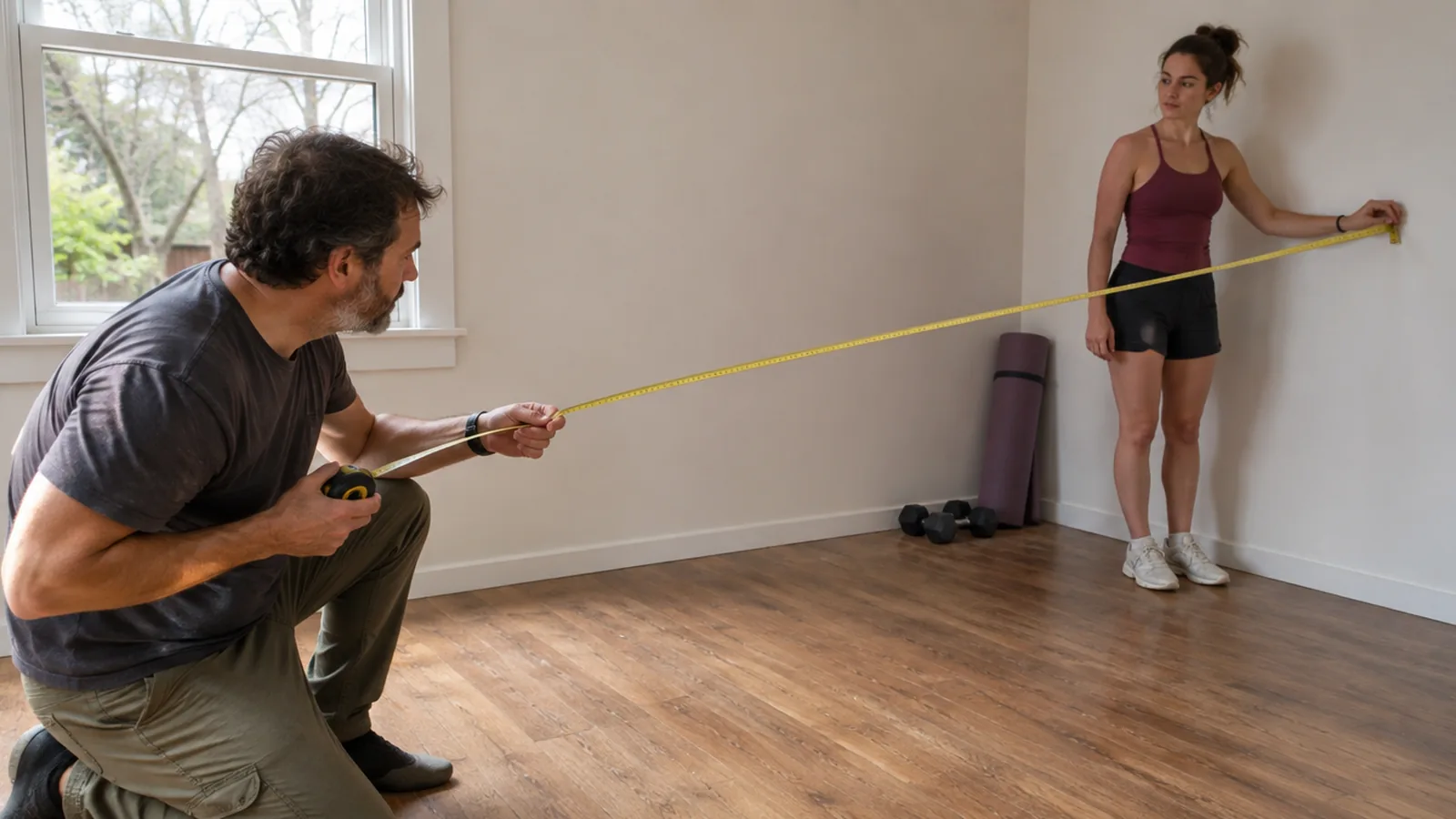
Footprint is not the same as space in use
Every product page lists dimensions. That is the footprint: the floor the machine covers while it stands still. What you actually need is the space in use, which includes room to get on and off, swing your arms, and fall safely.
Makers tell you this, but usually in the fine print. Peloton asks for 24 inches of space on all sides of its bike. Concept2 says the RowErg is 8 by 2 feet assembled but needs 9 by 4 feet to use. On a treadmill the extra space behind the belt is the big one.
So the rule is simple. Look for the clearance numbers, add them to the footprint, and then compare that box to your room.
Real numbers per equipment type
Here is what the makers state, and what that means in floor space. For the rack we did the math ourselves, because rack makers list the frame, not the space you need around a 7 foot barbell.
| Equipment | Footprint (maker spec) | Space in use | Ceiling needed |
|---|---|---|---|
| Dumbbells, bench, mat | varies | about 4 x 6 ft | your overhead reach |
| Rower (Concept2 RowErg) | 8 x 2 ft | 9 x 4 ft | any normal ceiling |
| Exercise bike (Peloton Bike) | 54 x 23 in | about 8.5 x 6 ft with 24 in all sides | 8 ft minimum |
| Treadmill (Peloton Tread) | 68 x 33 in | about 14 x 7 ft with 24 in sides and front, 79 in behind | your height plus 20 in |
| Wall unit (Tonal) | mounts on the wall | 7 x 7 ft | 7 ft 10 in ideal, 7 ft workable |
| Power rack (Titan T-3, 36 in deep) | 54 x 44.75 in | about 9 x 8 ft (our estimate) | 82 or 91 in rack, plus room to press |
Why the treadmill number is so big
Peloton asks for at least 24 inches to the left, right and front of its Tread, and 79 inches behind it. That rear zone is there so you do not hit a wall or a sofa if you slip off the belt. It is not optional, and other treadmill makers give similar safety zones in their manuals.
If that is more than your room allows, a walking pad or a rower is the realistic choice.
Why the rack number is our estimate
An Olympic men's barbell is 2.2 meters long, about 7.2 feet. You need a little room past each end to slide plates on. A rack also needs space in front to walk a squat out or set up a bench. Titan's T-3 frame alone covers 54 by 44.75 inches. Add the bar and some loading room and you land around 9 by 8 feet. Our power rack guide has more on rack depth.
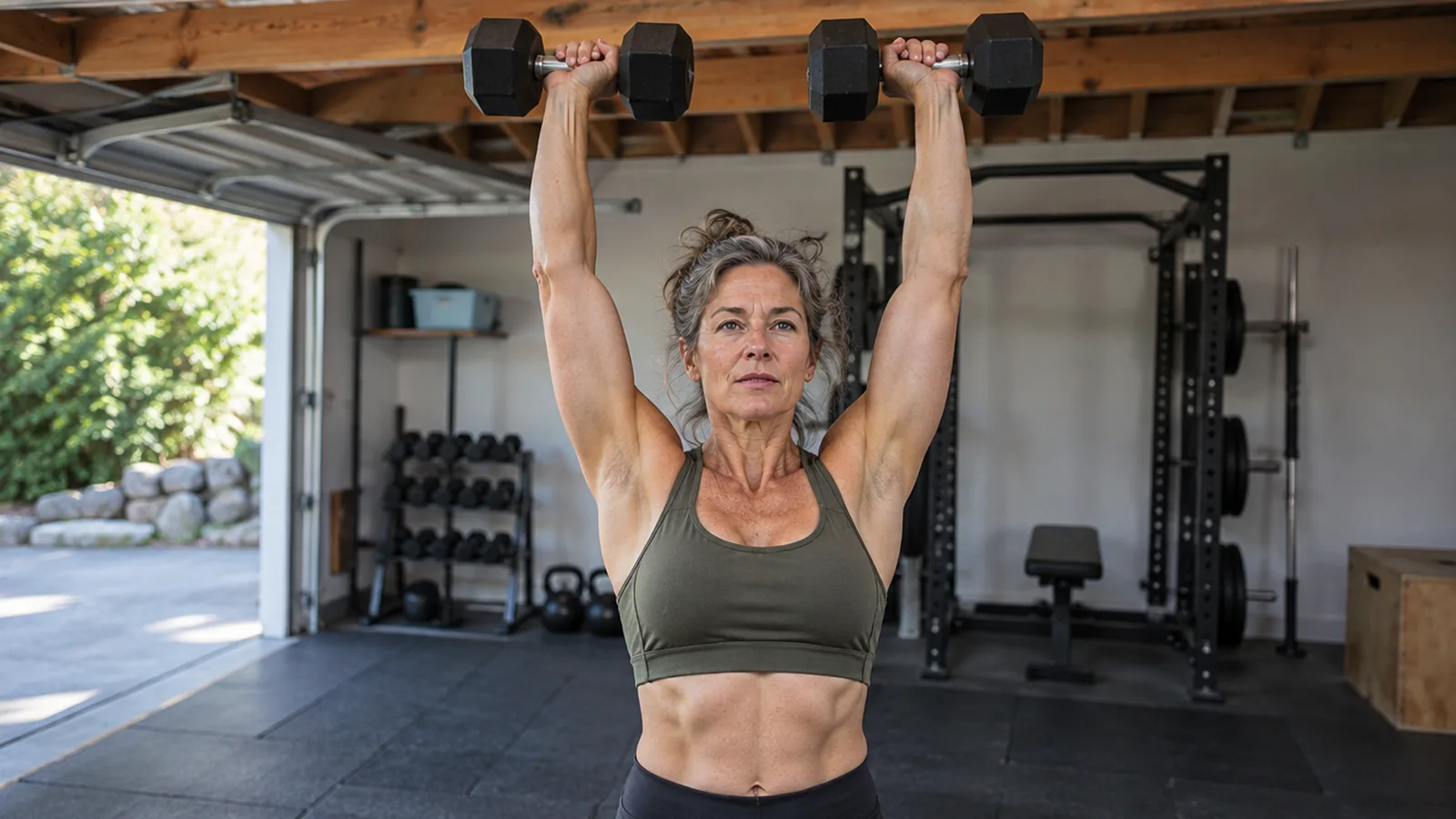
Ceiling height: the number people forget
Floor space is easy to see. Ceiling height bites you later, usually the first time you press a bar overhead.
Here is what makers say. Peloton wants an 8 foot ceiling for its bike, because you sit high and stand up on the pedals. Its Tread needs a ceiling at least 20 inches higher than the user, since the deck lifts you off the floor. Tonal's ideal clearance is 7 feet 10 inches so the arms can extend fully, though it says a 7 foot ceiling can still work with some changes.
Racks come in different heights. REP sells its PR-4000 at 80 or 93 inches, Titan sells the T-3 at 82 or 91 inches, and Rogue's R-3 stands just over 90 inches. With an 8 foot ceiling (96 inches) the shorter versions are the safe choice.
Overhead press and pull-ups
No rule fits everyone, because it depends on your height and arm length. The honest way is to test it. Stand where you plan to train and press a broom handle straight overhead. Measure from the floor to the top of the stick, then add a few inches for a plate or a dumbbell head. That is the ceiling you need.
For pull-ups, your head travels up to the bar or above it. A doorway bar avoids the problem, because the door frame sets the height. On a rack, check that your chin can clear the bar without your head touching the ceiling.
Apartment, spare room or garage
Apartment
In an apartment, plan around a corner of about 4 by 6 feet. Adjustable dumbbells, a folding bench and bands fit easily and store in a closet. Noise and floor load matter more than size. Dropping weights or running on a treadmill travels through floors. Our apartment home gym guide covers quiet setups in detail.
A wall unit like Tonal saves floor space, but needs 7 by 7 feet clear in front of it, studs in the wall, and usually your landlord's okay. See our wall-mounted gym guide before you drill.
Spare room
A typical spare bedroom fits a dumbbell area plus one cardio machine. Pick either a rower or a bike, not both, unless the room is large. A rower can stand upright when you are done, which frees the floor for stretching or a guest bed.
Garage
The garage is where a rack and barbell make sense. Concrete takes the load, noise is less of an issue, and ceilings are often fine away from the door rails. A rubber stall mat, often sold at 4 by 6 feet and 3/4 inch thick (Tractor Supply lists one at about $58 and 94 pounds), protects the floor and your plates.
How to measure your space in 15 minutes
- 1Mark the floor
Use painter's tape to outline the in-use box from the table, not just the footprint. - 2Move inside it
Lie down, stand up, swing your arms, step back. If you hit something, the box is too small. - 3Check the ceiling
Press a broom handle overhead in the spot you will train. Note beams and lights. - 4Check the path in
Measure doors, stairs and turns. Large gear often arrives in a box bigger than the machine.
The last step catches many people. A rack or treadmill that fits the room can still fail to fit through the door or around a tight stair turn.
What we would do with each size
With 25 square feet, build a dumbbell gym. It covers most strength training, and you can add a pull-up bar in a door frame. Our home gym under $500 guide lists the parts.
With 40 to 50 square feet, add one cardio machine or a smart wall unit. A rower is our pick for most people, because it trains the whole body and can be stored upright. Compare options in Concept2 vs Hydrow.
With a garage bay, add a rack and barbell. It is the most capable setup, but it needs the most room and the most careful ceiling check.
Questions people ask
About 4 by 6 feet of clear floor is enough for adjustable dumbbells, a bench and floor exercises. That is roughly the area of a large yoga mat plus some room to move.
Peloton asks for at least 24 inches on each side and in front of its Tread, and 79 inches behind it. That rear zone matters most, because it gives you room if you slip off the belt.
Many racks come in two heights, for example REP's PR-4000 at 80 or 93 inches. With an 8 foot ceiling, choose the shorter version and test your overhead press with a broom handle before you buy.
Yes. A dumbbell and bench setup fits in a corner and stores in a closet. Noise and floor protection are bigger issues than space, so skip dropping weights and use a thick mat.
Sources
- Concept2 RowErg: dimensions and space needed
- Peloton Bike: dimensions, clearance and ceiling
- Peloton Tread: dimensions and clearance
- Tonal: installation and ceiling clearance
- Tonal: space questions answered
- Tonal knowledge base: ceiling requirements
- Titan T-3 power rack specs
- Rogue R-3 product guide
- IWF weightlifting equipment rules
- Tractor Supply rubber stall mat 4 x 6 ft