Comparison
Tonal vs Tempo vs Speediance
Three smart home gyms, three different approaches. A detailed side-by-side comparison with real pricing and honest verdicts.
Wall-mounted home gyms have gone from niche curiosity to genuine game-changer. They take up almost zero floor space when not in use, deliver hundreds of exercises through a single machine, and look good doing it. But they’re also expensive, subscription-dependent, and not right for everyone.
This guide breaks down the top wall-mounted gym systems on the market right now, compares them head-to-head on specs and price, and covers the budget alternatives you should know about. Whether you’re seriously considering a Tonal or just trying to figure out what these things actually are, you’re in the right place.
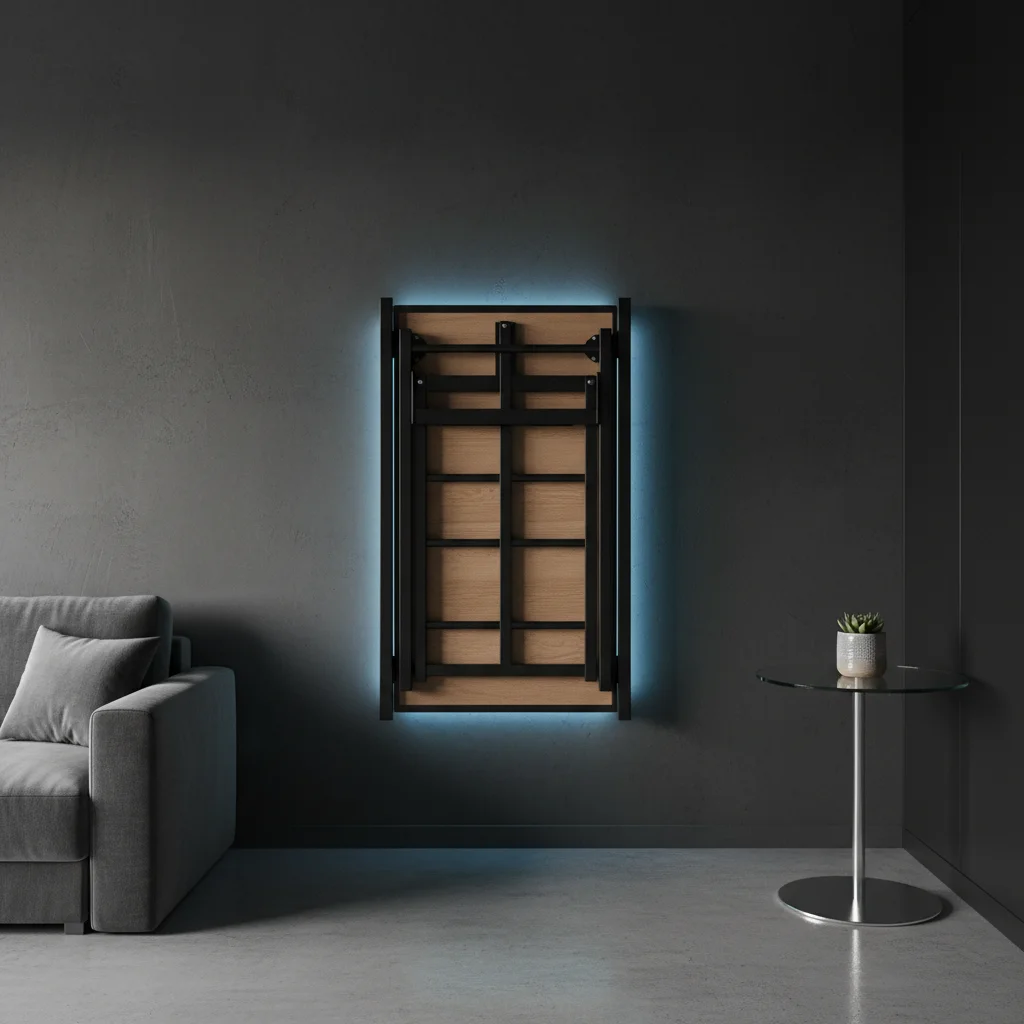
A wall-mounted home gym is a strength training system that bolts directly to your wall. Instead of weight plates, most use electromagnetic or motor-driven digital resistance — meaning the machine generates force electronically rather than through physical weights. You pull cables attached to adjustable arms, and the machine provides smooth, consistent resistance throughout the movement.
The main appeal is space efficiency. A traditional power rack needs a permanent 4x6-foot footprint (plus clearance). A wall-mounted gym protrudes about 6 inches from the wall when folded up. When you want to train, you swing the arms out, clip on handles or a bar attachment, and you have access to 200+ exercises — chest press, rows, squats, bicep curls, tricep extensions, deadlifts, and everything in between.
Most wall-mounted gyms include a touchscreen with guided workouts, automatic rep counting, and progress tracking. Think of them as a personal trainer, cable machine, and weight rack combined into one sleek unit that fits on your wall.
The catch? They cost $1,800 to $3,000 upfront, most require a monthly subscription ($19–$49/mo) to unlock the full feature set, and installation requires drilling into wall studs. They also cap out at 200–220 lbs of resistance, which is plenty for most people but won’t cut it for experienced powerlifters.
These are the three wall-mounted gym systems worth your attention in 2026. We’ve compared them on the specs that actually matter: resistance range, exercise count, subscription cost, and total cost of ownership over 3 years.
Tonal is the machine that started the wall-mounted gym category. It uses electromagnetic resistance (no cables running to weight stacks) to deliver up to 200 lbs of smooth, adjustable force. The 24-inch touchscreen displays guided workouts, tracks your form via built-in sensors, and automatically adjusts weight between sets based on your performance.
The software is where Tonal really separates itself. Programs are built by certified trainers, the AI adapts to your strength over time, and the movement library covers everything from powerlifting to yoga. The ecosystem feels polished in a way that competitors haven’t matched yet.
The downsides? It’s the most expensive option at $2,995, the $49/mo subscription is mandatory for most features, and you’ll pay $250–$500 for professional installation. Over 3 years, your total cost of ownership is roughly $5,759. That’s real money.
Speediance is the value play that keeps getting better. The Gym Monster offers up to 220 lbs of resistance (more than Tonal), a 21.5-inch touchscreen, and a growing library of on-demand workouts. It also folds flat against the wall when not in use — a design detail Tonal shares.
The subscription is $19/mo, which is dramatically cheaper than Tonal’s $49/mo. Even without the subscription, the machine functions as a manual cable gym — you just lose the guided workouts and tracking features. That’s a meaningful difference if you’re worried about long-term subscription dependency.
Where Speediance falls short is software maturity. The workout library is smaller, the AI coaching isn’t as sophisticated, and the user interface can feel a bit rough around the edges. It’s improving fast, but it’s not at Tonal’s level yet. Still, the 3-year total cost is roughly $2,483 — less than half of Tonal’s.
The Vitruvian takes a different approach. Instead of mounting to the wall, it’s a flat platform that sits on the floor and leans against the wall. You stand on it and pull cables that run through the base unit, which uses adaptive digital resistance up to 200 lbs per arm (400 lbs total for bilateral movements).
This design is a huge advantage for renters: no drilling, no wall studs, no landlord permission required. It’s also portable — you can move it to a different room or take it when you relocate. The resistance feels slightly different from Tonal and Speediance because of the cable angle, but it’s smooth and consistent.
The trade-off is size. The V-Form takes up more floor space than a true wall-mounted unit, and it doesn’t fold completely flat. The $39/mo subscription and $2,790 hardware price put the 3-year total at $4,194 — between Tonal and Speediance.
| Spec | Tonal | Speediance Gym Monster | Vitruvian V-Form |
|---|---|---|---|
| Price | $2,995 | $1,799 | $2,790 |
| Subscription | $49/mo | $19/mo | $39/mo |
| 3-Year Total | $4,759 | $2,483 | $4,194 |
| Max Resistance | 200 lbs | 220 lbs | 200 lbs/arm |
| Screen | 24″ touchscreen | 21.5″ touchscreen | App-based (phone/tablet) |
| Exercises | 200+ | 150+ | 100+ |
| Wall Mount Required | Yes | Yes | No (floor-based) |
| Folds Flat | Yes | Yes | No |
| Installation | Pro install ~$250 | DIY or pro ~$150 | Self-setup (no install) |
| Works Without Sub | Very limited | Yes (manual mode) | Limited |
| Warranty | 1 year | 2 years | 2 years |
Wall-mounted gyms aren’t for everyone. Here’s an honest look at what they do well and where they fall short.
Installing a wall-mounted gym is not a casual weekend project. It’s doable for someone comfortable with power tools, but there are a few non-negotiable requirements you need to understand before you buy.
Tonal strongly recommends (and in some cases requires) professional installation at around $250. Speediance is designed for easier DIY installation — the mounting bracket is simpler and the instructions are clearer. Either way, you need a stud finder, a drill, a level, and ideally a second person to help hold the unit while you bolt it in. The machine itself weighs 50–70 lbs depending on the model.
If you’re not confident finding and drilling into wall studs, pay for professional installation. A poorly mounted unit is a serious safety hazard.
Wall-mounted gyms and floor-standing home gym setups serve different needs. Neither is universally better — it depends on your space, goals, and budget.
Here’s the deal: if your primary constraint is space, a wall-mounted gym is hard to beat. A Tonal or Speediance folds flat and gives you a full-body workout in 21 square feet. A comparable free weight setup needs 60–80 square feet permanently. For apartment dwellers, that difference is everything.
If your primary constraint is budget, a traditional setup wins every time. A complete home gym under $1,000 with a power rack, barbell, plates, and bench will outlast any smart gym on the market — and it works fine in 30 years even if every tech company on earth goes bankrupt.
Not ready to spend $2,000–$3,000 on a smart wall-mounted gym? You don’t have to. Here are three budget-friendly alternatives that deliver real results without the premium price tag.
A wall-mounted cable pulley with a loading pin gives you a functional cable station for a fraction of the cost. Mount it to wall studs, load standard weight plates, and you can do lat pulldowns, cable rows, tricep pushdowns, face pulls, bicep curls, and cable flyes. Add a second pulley at floor level for low cable exercises.
Popular options include the Mikolo wall-mounted pulley system (~$80) and the ARCHON wall-mounted cable station (~$140). You’ll need your own weight plates, but if you already have a barbell setup, you’re good to go. Total cost with plates: $150–$300.
The downside: no guided workouts, no automatic tracking, no touchscreen. You’re trading convenience for cost savings. But for experienced lifters who know what they’re doing, it’s a phenomenal value.
This is the ultra-budget option that people underestimate. A quality set of resistance bands with handles and a door anchor (like the Bodylastics or FITFORT sets) lets you replicate most cable machine exercises for under $80. Band resistance ranges from 5 lbs to 150+ lbs when stacking multiple bands.
Bands have a different resistance curve than cables (they get harder at full extension), but for general fitness, muscle building, and rehabilitation, they’re remarkably effective. They’re also completely portable, require zero installation, and work in any room with a door.
The TRX mounts to a door frame, a wall anchor, or a ceiling hook. It uses your bodyweight as resistance for rows, push-ups, squats, lunges, and core work. It won’t replace heavy lifting, but it’s outstanding for functional strength, stability work, and high-rep training.
At $130 for the TRX Home2 system (or ~$170 for the Pro4), it’s one of the best dollar-per-exercise values in home fitness. Pair it with a set of resistance bands and you have a surprisingly complete setup for under $250 total.
Wall-mounted smart gyms range from $1,799 (Speediance Gym Monster) to $2,995 (Tonal). Most also require a monthly subscription of $19–$49. Installation is typically $250–$500 if you hire a professional. Budget DIY alternatives using a wall-mounted cable pulley system can be built for $150–$300.
It depends on your lease and wall construction. Wall-mounted gyms need to be anchored into wall studs (not just drywall). Most landlords won’t allow it because installation requires drilling multiple large holes. If you own your apartment or have explicit written permission, and your walls have standard wood stud framing, installation is straightforward. The Vitruvian V-Form Trainer is a good alternative for renters — it sits on the floor and leans against the wall, requiring no wall mounting.
The unit itself needs about 2–3 feet of wall width and 4–5 feet of height. But you also need at least 7 feet of open floor space in front of the unit for exercises. Total footprint when in use is roughly 3x7 feet — about 21 square feet. When not in use, the arms fold flat and take up almost zero floor space.
This is a real risk with any subscription-based smart gym. If the company shuts down, the guided workouts and AI features will likely stop working. The basic resistance mechanism may still function for manual use, but you’d lose the software that makes these machines worth the premium price. Tonal has significant venture funding which reduces (but doesn’t eliminate) this risk. It’s worth considering — a traditional cable machine or power rack never needs a software update.
Wall-mounted or not, finding the right home gym comes down to your space, budget, and training goals. Our comprehensive ranking covers every major option on the market — from $500 budget builds to $5,000 smart systems.
Three smart home gyms, three different approaches. A detailed side-by-side comparison with real pricing and honest verdicts.
Limited space doesn’t mean limited gains. The best compact equipment for studio apartments and small rooms.
Our top-ranked smart home gym machines for every budget. Full specs, real pricing, and side-by-side comparisons.