Comparison
Peloton vs NordicTrack
A detailed head-to-head comparison of Peloton and NordicTrack treadmills and bikes, covering hardware, content, and total cost.
Aktualisiert: March 2026
NordicTrack makes solid cardio equipment, but the iFit subscription model has become a dealbreaker for a growing number of buyers. Locking incline controls, structured workouts, and performance tracking behind a $39/month paywall means you are paying a premium before you even factor in the hardware cost. Over three years, that adds up to over $1,400 in subscription fees alone.
The good news? There are excellent treadmills, bikes, and rowers that deliver comparable or better performance without the subscription overhead. We have tested every machine on this list hands-on and ranked them based on build quality, ride or run feel, total cost of ownership, and whether they actually need a subscription to be useful.
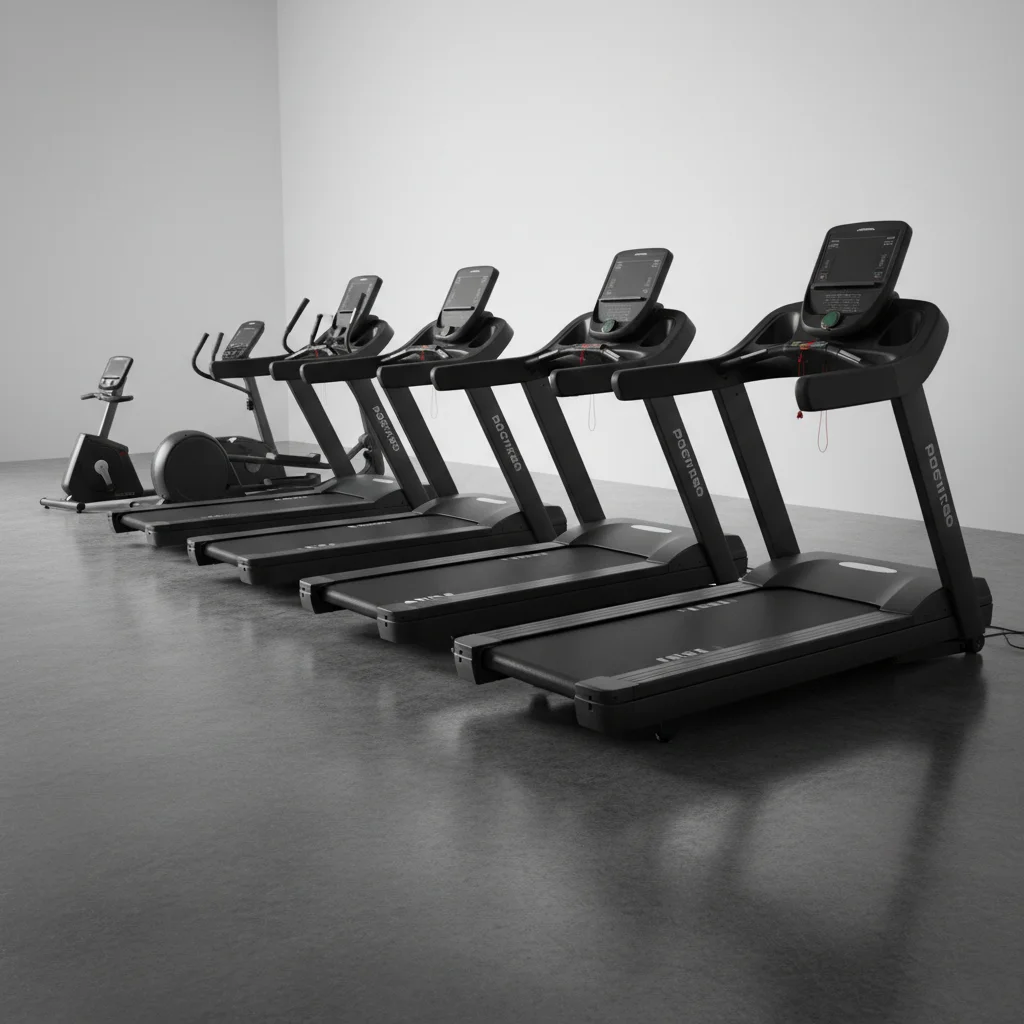
A no-nonsense treadmill with a 3.5 CHP motor, 15% incline, and a lifetime frame warranty. No subscription required to access any feature. Just turn it on and run.
$1,100 — no mandatory subscription
See DetailsA connected bike with a 21.5-inch touchscreen, 32 resistance levels, and a content library that rivals iFit at a lower monthly cost. Strong build quality for the price.
$839 + $34.99/mo optional subscription
See DetailsThe gold standard in rowing machines. Used by Olympic athletes and CrossFit boxes worldwide, it requires zero subscription and will outlast every other machine on this list.
$990 — no subscription required
See DetailsHere is how each alternative stacks up against the NordicTrack model it most directly competes with. Pay close attention to the subscription column—that is where the long-term cost difference really shows up.
| Machine | Category | Price | Subscription | Key Advantage |
|---|---|---|---|---|
| Sole F80 | Treadmill | $1,100 | None required | Lifetime frame & motor warranty, no fees |
| Horizon 7.8 AT | Treadmill | $1,800 | None required | Best for interval training, rapid speed keys |
| Peloton Tread | Treadmill | $3,295 | $44/mo | Premium build, best-in-class content |
| ProForm Pro 2000 | Treadmill | $1,300 | $39/mo (iFit) | Same iFit platform, lower hardware cost |
| Echelon EX-5s | Bike | $839 | $34.99/mo | Touchscreen bike at half the NordicTrack S22i price |
| Schwinn IC4 | Bike | $799 | None required | Works with Peloton, Zwift, Apple Fitness+ |
| Concept2 Model D | Rower | $990 | None required | Industry-standard air rower, built to last decades |
NordicTrack's treadmills, particularly the Commercial 1750 and 2450, are popular for good reason: big touchscreens, automatic incline adjustments, and immersive iFit workouts that simulate outdoor terrain. But the hardware is only half the story. Once you cancel iFit, those machines lose most of what makes them special. These alternatives give you a better experience without that dependency.
Best for: Runners who want reliability over flash.
The Sole F80 is the treadmill equivalent of a Toyota Camry. It is not the flashiest machine in the room, but it will run without drama for years, and you will never have to pay a monthly fee to use it. The 3.5 CHP motor handles everything from walking to all-out sprints without straining. The 22 x 60-inch running deck gives you plenty of room, and the cushioning system does a genuinely good job of absorbing impact without feeling mushy.
Sole recently updated the F80 with Bluetooth connectivity and app compatibility, so you can still stream workouts from third-party apps like Peloton or Apple Fitness+ on your own device. The built-in 10.1-inch LCD is basic but functional. What you are really paying for here is the motor, the belt, and the frame, and all three are excellent for the price.
Best for: Serious runners who do interval training.
The Horizon 7.8 AT is designed for runners first and foremost, and it shows. The standout feature is the QuickDial system—two physical dials on either side of the console that let you adjust speed and incline instantly without fumbling with a touchscreen. During interval workouts, this is a game-changer. You can go from a jog to a sprint and back in seconds.
The 4.0 CHP motor is one of the strongest in this price range, and the belt is rated for users up to 350 lbs. Horizon also offers a lifetime motor and frame warranty with no subscription strings attached. The treadmill integrates with Peloton, Zwift, and other popular apps through Bluetooth, so you get connected fitness on your own terms without being locked into a single ecosystem.
Best for: Buyers who want premium hardware and world-class content.
If the reason you are leaving NordicTrack is the subscription model, the Peloton Tread might not solve that problem—it has its own $44/month fee. But if your issue with NordicTrack is build quality, content depth, or software polish, the Peloton Tread is in a different league. The 23.8-inch HD touchscreen is crisp and responsive, the slat belt design absorbs impact better than any traditional belt treadmill we have tested, and the instructor-led classes are genuinely motivating.
The Peloton Tread makes the most sense for people who are already in the Peloton ecosystem or who plan to use the bike and tread together. The content library is massive, the community features are well-designed, and the hardware feels like it will last. It is the most expensive option on this list by a wide margin, but the overall experience justifies the cost for the right buyer. For a head-to-head breakdown, see our Peloton vs NordicTrack comparison.
Best for: iFit fans who want the same software for less money.
Here is the insider pick: ProForm and NordicTrack are owned by the same parent company, iFit Health & Fitness. The ProForm Pro 2000 runs the exact same iFit software, connects to the same trainer-led workouts, and uses the same automatic incline technology as NordicTrack treadmills. The difference? It costs several hundred dollars less than comparable NordicTrack models.
The Pro 2000 features a 3.25 CHP motor, a 22 x 60-inch running surface, a 14-inch HD touchscreen, and -3% to 15% incline and decline capability. The build quality is a small step down from NordicTrack—slightly thinner side rails, marginally less premium materials—but the running experience is virtually identical. If you actually like the iFit ecosystem and just want a better price on the hardware, this is the smart move.
NordicTrack's S22i Studio Cycle is a capable bike, but at $1,499 plus the iFit subscription, the total cost adds up quickly. These alternatives deliver a comparable or better riding experience with more flexibility in how you access content.
Best for: Connected cycling on a budget.
The Echelon EX-5s is the closest direct competitor to NordicTrack's cycling lineup, and it undercuts them significantly on price. For $839, you get a sturdy frame, magnetic resistance with 32 levels, a 21.5-inch flip HD touchscreen, and Bluetooth connectivity for heart rate monitors and headphones. The Echelon app offers live and on-demand classes across cycling, strength, yoga, and cardio at $34.99/month, which is slightly less than iFit.
The ride feel is smooth and quiet thanks to the magnetic resistance system. The 32 resistance levels give you plenty of range, from easy recovery spins to standing climbs that will have your legs burning. Build quality is solid for the price, though it does not feel quite as robust as the S22i. For a deeper look at how Echelon compares to the other major bike brand, see our Peloton vs Echelon comparison.
Best for: App-agnostic riders who want flexibility.
The Schwinn IC4 takes a refreshingly different approach to connected fitness: instead of locking you into a proprietary app, it works with virtually everything. Pair it with the Peloton app for $12.99/month, use it with Zwift for virtual outdoor rides, connect it to Apple Fitness+, or just ride with no app at all. The choice is entirely yours.
Hardware-wise, the IC4 delivers 100 levels of magnetic resistance, a 40 lb flywheel for a smooth ride feel, and Bluetooth connectivity for cadence and heart rate. It does not have a built-in screen, which some buyers see as a downside and others see as an advantage (use your own tablet and you will never be stuck with outdated hardware). The build quality is genuinely impressive for under $800, and Schwinn backs it with a solid 10-year frame warranty.
NordicTrack's RW900 is a solid rower, but it carries the same iFit dependency as the rest of the lineup. If you want a rowing machine that stands on its own merits without any software strings attached, there is really only one answer.
Best for: Anyone who wants the best rower, period.
The Concept2 Model D is not flashy. It does not have a touchscreen. There are no virtual waterways or trainer-led classes built in. What it does have is a reputation built over decades as the most reliable, most accurate, and most widely used rowing machine on the planet. Every Olympic rowing team, every CrossFit gym, and every serious rowing facility uses Concept2 machines. There is a reason for that.
The air resistance system provides a natural, responsive rowing feel that adjusts automatically to your effort level. Pull harder, and you get more resistance. The PM5 performance monitor tracks every metric you could want: pace, watts, calories, stroke rate, and distance. It connects via Bluetooth and ANT+ to apps like ErgData, Concept2 Logbook, and Asensei for guided coaching. The entire machine breaks down in minutes for storage and is built to last 20+ years with minimal maintenance.
Many buyers are looking for NordicTrack alternatives because of the mandatory iFit subscription ($39/month) that locks core features behind a paywall. Without iFit, most NordicTrack treadmills and bikes lose access to incline/decline adjustments, structured programs, and performance tracking. Competitors like Sole and Horizon offer similar or better hardware without requiring any subscription, which makes them more cost-effective over the long run.
Technically yes, but the experience is severely limited. Without an active iFit subscription, most NordicTrack treadmills restrict you to basic manual mode with no automatic incline adjustments, no guided workouts, and no performance tracking. On some models, even speed and incline controls are partially locked. This is a major reason buyers are turning to alternatives like the Sole F80 or Horizon 7.8 AT, which deliver their full feature set without any subscription.
It depends on what you value. The NordicTrack 1750 has a larger touchscreen, more interactive training through iFit, and automatic incline/decline adjustments during workouts. The Sole F80 has a more powerful motor, a longer warranty (lifetime frame and motor), no mandatory subscription, and a simpler interface that just works out of the box. If you want a reliable treadmill for running without ongoing fees, the Sole F80 is the better choice. If you thrive on interactive, trainer-led workouts, the 1750 with iFit may be worth the subscription cost.
The Echelon EX-5s at $839 is our top pick for a NordicTrack bike alternative. It offers a solid build, magnetic resistance with 32 levels, a 21.5-inch HD touchscreen, and a subscription that costs $34.99/month compared to iFit's $39/month. The bike itself is also significantly cheaper than NordicTrack's S22i Studio Cycle. For a budget option, the Schwinn IC4 at $799 works with multiple apps including Peloton, Zwift, and Apple Fitness+ without locking you into a single ecosystem.
Yes, ProForm and NordicTrack are both owned by iFit Health & Fitness (formerly Icon Health & Fitness). They share the same iFit platform and many of the same manufacturing processes. The key difference is positioning: NordicTrack targets the mid-to-premium market while ProForm is positioned as the more affordable brand. This means you can often get very similar hardware and software at a lower price by choosing ProForm, though NordicTrack models typically have slightly better build quality and more advanced features.
A detailed head-to-head comparison of Peloton and NordicTrack treadmills and bikes, covering hardware, content, and total cost.
Our complete ranking of the best treadmills for every budget, from budget-friendly walkers to premium running machines.
How to build a complete, high-quality home gym setup for under $2,000 without sacrificing performance or durability.