Guide
Best Home Gym Under $500
Build a solid training setup without breaking the bank. Budget-friendly equipment picks, smart buying tips, and complete setup plans under $500.
Zuletzt aktualisiert: März 2026
In einer kleinen Wohnung zu leben bedeutet nicht, dass du auf ein echtes Workout verzichten musst. Es bedeutet, dass du klüger entscheiden musst, was du kaufst, wo du es hinstellst und wie du trainierst. Die meisten Home-Gym-Ratgeber gehen davon aus, dass du eine Garage, einen Keller oder zumindest ein Gästezimmer hast. Hast du wahrscheinlich nicht. Du hast eine Wohnzimmerecke, eine Nische im Schlafzimmer oder vielleicht einen Balkon, der streng genommen nicht ganz vorschriftsmäßig ist.
Wir haben Hunderte Stunden damit verbracht, kompakte Trainingsgeräte in echten Wohnungen zu testen — nicht in 1.500 Quadratfuß großen Showrooms. Dieser Ratgeber zeigt dir genau, was auf engem Raum funktioniert, was deine Nachbarn hassen werden und wie du ein Setup aufbaust, das wie ein echtes Gym performt, ohne deine ganze Wohnung zu vereinnahmen.
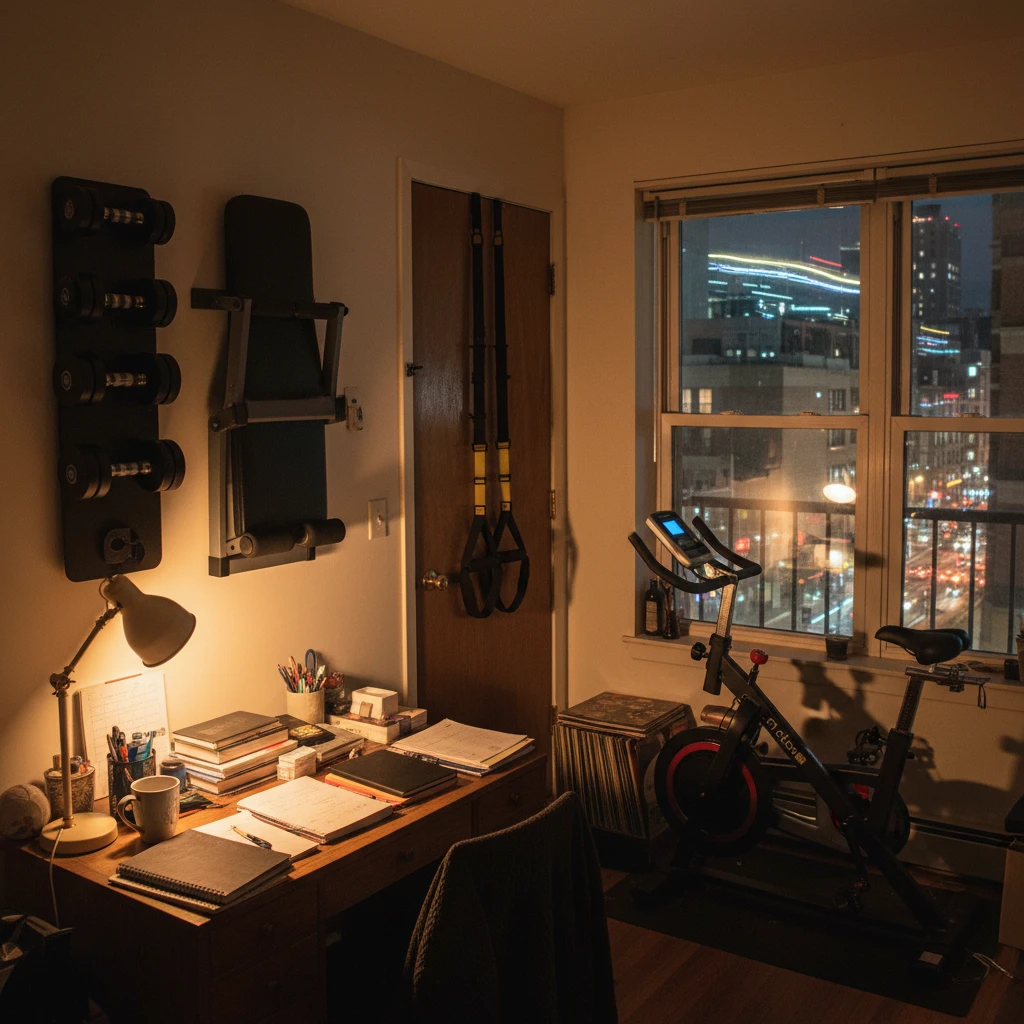
Die ehrliche Antwort: weniger, als du denkst. Das größte Missverständnis bei Home Gyms ist, dass du einen eigenen Raum brauchst. Brauchst du nicht. Du brauchst genug Bodenfläche, um dich hinzulegen, die Arme auszustrecken und dich ein paar Fuß in jede Richtung zu bewegen. Das war's.
Eine Fläche von 4x6 Fuß (24 Quadratfuß) reicht für eine klappbare Hantelbank, verstellbare Kurzhanteln und Körpergewichtsübungen. Das entspricht etwa der Größe einer großen Yogamatte. Wenn du in deiner Wohnung einen Liegestütz machen kannst, hast du genug Platz für ein funktionierendes Gym.
Mit 35 Quadratfuß kannst du einen Schlingentrainer (TRX) ergänzen, Kurzhantelübungen über die volle Bewegungsamplitude ausführen und hast Platz für ein kompaktes Cardiogerät wie ein klappbares Rudergerät oder einen Unter-Tisch-Heimtrainer. Das ist der Sweet Spot für die meisten Wohnungs-Gyms.
Auf 48 Quadratfuß passt ein Smart-Gym-System wie das Speediance Gym Monster oder Tonal, dazu eine Hantelbank und etwas Platz für Bodenübungen. Das ist das Maximum, das die meisten Wohnungsbewohner brauchen — und immer noch kleiner als ein Parkplatz.
| Platzstufe | Maße | Quadratfuß | Was reinpasst |
|---|---|---|---|
| Minimum | 4 x 6 ft | 24 sq ft | Kurzhanteln, Bänder, Matte, Körpergewicht |
| Bequem | 5 x 7 ft | 35 sq ft | Obiges + Hantelbank, TRX, kompaktes Cardio |
| Komplettes Setup | 6 x 8 ft | 48 sq ft | Obiges + Smart Gym oder klappbares Rack |
Eine wichtige Sache: Auch die Deckenhöhe zählt. Wenn du Überkopfdrücken machst, brauchst du mindestens 8 Fuß Freiraum. Die meisten Wohnungen haben 8 bis 9 Fuß hohe Decken, also ist das meist kein Problem — aber prüfe es, bevor du eine stehende Kabelzugmaschine oder ein hohes Power Rack kaufst.
Nicht jedes Trainingsgerät ist wohnungstauglich. Die beste Ausrüstung für kleine Räume fällt in drei Kategorien: klappbar, wandmontiert oder von Natur aus kompakt. Das solltest du priorisieren.
Klappbare Geräte sind der beste Freund des Wohnungsbewohners. Nach dem Training klappen sie zusammen, rutschen unters Bett oder verschwinden im Schrank. Die besten Optionen sind:
Wenn dein Vermieter es erlaubt (prüfe immer zuerst deinen Mietvertrag), beanspruchen wandmontierte Geräte bei Nichtgebrauch null Bodenfläche:
Manche Ausrüstung ist einfach von Haus aus klein:
Dieser Abschnitt fehlt in den meisten Wohnungs-Gym-Ratgebern und ist wohl der wichtigste. Eine Lärmbeschwerde — oder schlimmer, der Verlust deiner Kaution — ruiniert dein Home-Gym-Erlebnis schneller als jeder Gerätedefekt.
Diese Übungen senden Aufprallvibrationen durch Wohnungsböden und -wände. Die Nachbarn unter dir spüren sie, auch wenn du denkst, sie seien leise:
| Laute Übung | Leise Alternative | Lärmpegel |
|---|---|---|
| Burpees | Squat Thrusts (ohne Sprung) | Niedrig |
| Box Jumps | Step-ups mit Kurzhanteln | Minimal |
| Jump Squats | Langsame Goblet Squats | Minimal |
| Laufen (Laufband) | Walking Pad / Heimtrainer | Niedrig |
| Kreuzheben (mit Ablassen) | Rumänisches Kreuzheben (kontrolliert) | Minimal |
| Battle Ropes | Widerstandsband-Slams | Niedrig |
| Kettlebell-Swings (schwer) | Hip Hinges mit Band | Minimal |
Wohnungsböden — ob Parkett, Laminat, Fliesen oder Teppich — wurden nicht für Trainingsgeräte gemacht. Eine einzige fallengelassene Kurzhantel kann eine Fliese sprengen, Parkett eindrücken oder durch Laminat schlagen. Bodenschutz ist nicht optional. Er gehört einfach dazu.
Für den besten Schutz von Wohnungsböden nutze ein Zwei-Lagen-System: eine dünne, rutschfeste Regalauflage unten (damit die Gummimatte nicht auf glatten Böden verrutscht), darüber eine 3/4-Zoll-Gummimatte. Dieses Setup kostet etwa $50-60 für eine 4x6-Fuß-Fläche und bietet hervorragende Stoßdämpfung, Schalldämmung und Kratzschutz.
Hier sind drei bewährte Konfigurationen, jede auf die Realität des Wohnungslebens zugeschnitten: wenig Platz, Lärmbeschränkungen und die Notwendigkeit, nach dem Training alles zu verstauen.
Aktive Stellfläche: 4 x 6 ft (24 sq ft) | Stauraum: Passt in einen Schrank
| Gerät | Maße (verstaut) | Ca. Kosten |
|---|---|---|
| Adjustable dumbbells (up to 25 lbs per hand) | 14 x 8 x 8 in (pair) | $80–$120 |
| Widerstandsband-Satz (5 Bänder) | Passt in eine Schublade | $25–$35 |
| Doorframe pull-up bar | 36 x 6 x 6 in | $25–$35 |
| Yoga / exercise mat (6 mm) | 26 in (rolled) | $20–$30 |
| Ab roller | 12 x 8 x 8 in | $12–$15 |
| Gesamt | $162–$235 |
Best for: Beginners, budget-conscious trainees, studio apartments, or anyone who wants a no-excuses setup with zero commitment to permanent gear.
Active footprint: 5 x 7 ft (35 sq ft) | Storage footprint: 3 x 2 ft corner
| Gerät | Maße (verstaut) | Ca. Kosten |
|---|---|---|
| PowerBlock Elite 5–50 lbs | 12 x 6 x 6 in (each) | $380–$430 |
| Flybird foldable adjustable bench | 31 x 12 x 10 in (folded) | $130–$150 |
| TRX GO suspension trainer | Fits in a bag | $130–$150 |
| Widerstandsband-Satz (5 Bänder) | Passt in eine Schublade | $25–$35 |
| 3/4-inch rubber mat (4 x 6 ft) | Stays on floor | $40–$50 |
| Gesamt | $705–$815 |
Best for: Intermediate lifters, one-bedroom or larger apartments, anyone following a structured hypertrophy or strength program who doesn’t need a barbell.
Active footprint: 5 x 7 ft (35 sq ft) | Storage footprint: 19 x 12 in (folded)
| Gerät | Maße (verstaut) | Ca. Kosten |
|---|---|---|
| Speediance Gym Monster (all-in-one smart gym) | 19 x 12 x 38 in (folded) | $1,400–$1,800 |
| Exercise mat (6 x 4 ft) | Rolls up or stays flat | $30–$50 |
| Resistance band set | Fits in a drawer | $25–$35 |
| Gesamt | $1,455–$1,885 |
Best for: Tech-forward apartment dwellers who want a single, sleek machine that does everything. Ideal if you can’t drill into walls (rules out Tonal) but still want a comprehensive strength training system.
Here’s our pick for each major equipment category, chosen specifically for apartment suitability — meaning compact size, low noise, and easy storage.
Top pick: PowerBlock Elite (5–50 lbs) — ~$400
The PowerBlocks win for apartments because they’re the most compact adjustable dumbbells on the market. At max weight, each block is only 12 inches long, compared to 17+ inches for the Bowflex SelectTech 552. That matters when you’re storing them in a closet or beside a nightstand. They’re also expandable up to 70 or 90 lbs with add-on kits, so you won’t outgrow them.
Budget alternative: Yes4All adjustable dumbbells — ~$60–$80
Classic spin-lock dumbbells are cheap and effective. The weight changes are slower (you’re threading collars on and off), but they’re nearly indestructible and available at very low price points. Just be careful not to drop them — iron plates on apartment floors will end badly.
Top pick: Rogue Monster Bands or EliteFTS bands — ~$30–$50 per set
High-quality loop bands last for years and don’t snap. Get a set with at least three resistance levels (light, medium, heavy). Use them for pull-aparts, face pulls, assisted pull-ups, banded squats, and as added resistance on dumbbell exercises. The entire set fits in a shoe box.
Top pick: Flybird Adjustable Weight Bench — ~$140
The Flybird folds down to 31 x 12 x 10 inches, which is small enough to slide under a bed or stand up in a closet. It supports up to 620 lbs, has seven backrest positions and three seat positions, and weighs just 28 lbs. For apartment use, the foldability is the deciding factor — most competing benches don’t fold at all.
Top pick: TRX GO Suspension Trainer — ~$130
The TRX GO is the lightest model in the TRX lineup (less than 1 lb), designed specifically for travel and small spaces. It hooks over any sturdy door and adds rows, chest presses, single-leg squats, hamstring curls, and dozens of core exercises to your repertoire. When you’re done, it fits in a small bag that tucks in a drawer.
Top pick: Manduka PRO or BalanceFrom GoYoga — ~$20–$100
For apartment use, look for a mat that’s at least 6mm thick for joint cushioning. The BalanceFrom GoYoga ($20) is a solid budget option. If you want something that lasts longer and provides more cushion, the Manduka PRO ($100) is a buy-it-once investment. Either way, a mat is essential for floor exercises, stretching, and protecting your knees on hard apartment floors.
Top pick for cycling: Sunny Health SF-B1805 Indoor Bike — ~$300
This is one of the most compact indoor bikes on the market. It has a small footprint (40 x 20 inches), magnetic resistance for quiet operation, and a belt drive that produces almost no noise. It’s apartment-friendly in every way.
Top pick for walking / running: WalkingPad R2 — ~$400
Walking pads are the apartment answer to treadmills. The R2 folds in half, slides under a couch, and runs whisper-quiet at walking speeds. It tops out at 7.5 mph for light jogging. If your primary cardio is walking or moderate-pace runs, this is far more practical than a full-size treadmill in a small apartment.
Smart gyms have become some of the most apartment-friendly fitness solutions available. They consolidate multiple pieces of equipment into one unit, produce almost zero noise, and most models are designed with small spaces in mind.
Tonal mounts to a wall and uses electromagnetic resistance to provide up to 200 lbs per arm. It’s about the size of a large flat-screen TV (51 x 21 x 5 inches when arms are stored) and weighs about 150 lbs. The built-in screen offers hundreds of guided workouts, real-time form feedback, and progressive overload tracking.
The Speediance is the apartment gym we’re most excited about. It’s a freestanding smart gym with up to 220 lbs of digital resistance, a built-in touchscreen, and — critically — it folds down and rolls on wheels. No wall mounting. No installation. No permission from your landlord. It unfolds for a workout and folds back up when you’re done.
If you own your apartment or have landlord permission to mount to walls, Tonal is the better overall product — it has a more mature platform, better content, and zero floor footprint. If you rent and can’t (or won’t) drill into walls, the Speediance is the clear choice. It gives you comparable resistance, it’s portable, and it costs about $1,200 less than Tonal after installation.
In an apartment, your gym needs to disappear when you’re not using it. Here are practical storage strategies for every type of equipment.
A standard apartment closet (24 inches deep, 4–6 feet wide) can hold an entire budget gym setup. Adjustable dumbbells sit on the floor. The foldable bench stands vertically against the wall. Bands, mat, and accessories hang on hooks or sit on a shelf. You open the closet, pull everything out, train, and put it back. Total setup time: under 2 minutes.
A small utility cart ($30–$50) with wheels can hold your dumbbells, bands, and accessories in a tidy, mobile station. Roll it out for training, roll it back to a corner or closet when you’re done. This is especially useful if your apartment doesn’t have a closet near your training space.
You can build a fully functional apartment gym in as little as 4x6 feet (24 square feet) of open floor space. That’s enough room for a foldable bench, a set of adjustable dumbbells, and bodyweight exercises. If you want to add a compact cardio machine like a foldable rower or under-desk bike, plan for about 5x7 feet. The key is choosing equipment that folds or stores vertically when not in use.
It depends on what you’re doing. Jumping exercises like burpees and box jumps will absolutely bother downstairs neighbors. Heavy deadlifts and dropped weights cause serious vibrations through apartment floors. But most dumbbell exercises, resistance band work, cable machine movements, and controlled bodyweight exercises are apartment-friendly. Adding thick rubber mats reduces impact noise significantly.
For apartments specifically, wall-mounted systems like Tonal are excellent. Tonal takes up almost zero floor space, produces virtually no noise, and replaces dozens of pieces of equipment. The downside is the price — $2,995 plus a $49/month membership. If you can afford it and your landlord allows wall mounting, it’s one of the best apartment gym solutions available. Freestanding options like Speediance are a good alternative if you can’t drill into walls.
You can, but it requires some planning. Treadmills generate rhythmic vibration that travels through floors and can disturb neighbors below you. Use a thick treadmill mat (at least 6mm), stick to walking or light jogging rather than sprinting, and avoid early morning or late night sessions. Walking pad treadmills that max out at 4 mph are the quietest option for apartments. If you’re on the ground floor, noise is much less of a concern.
You can build a surprisingly effective apartment gym for about $200–$300. A set of resistance bands ($30), a pair of adjustable dumbbells or a few fixed-weight pairs ($100–$150), a yoga mat ($20), and a doorframe pull-up bar ($30) give you enough equipment for hundreds of exercises. If you add a foldable bench ($100–$140), you unlock even more movement options. This basic setup stores in a closet and works for everything from strength training to HIIT.
Build a solid training setup without breaking the bank. Budget-friendly equipment picks, smart buying tips, and complete setup plans under $500.
Two of the biggest names in smart home gyms go head to head. We compare resistance, features, content, and value for apartment and home use.
Our top-ranked home gym machines and setups across every budget and category. Full reviews, specs, and recommendations.