Best Of
Best Massage Guns 2026
Our complete ranking of the best percussion massage guns at every price point, from budget picks under $100 to pro-level recovery tools.
Last updated: March 2026
The percussion massage gun market has exploded over the past few years, but when it comes to serious recovery tools, two names dominate every conversation: Therabody's Theragun Pro Plus and Hyperice's Hypervolt 2 Pro. Both are premium devices built for athletes, lifters, and anyone who takes post-workout recovery seriously. But at $499 and $329 respectively, neither one is an impulse buy.
We have spent over three months testing both massage guns side by side, using them daily after strength training, running, and mobility sessions. Here is our honest, data-driven breakdown to help you decide which one deserves a spot in your home gym setup.
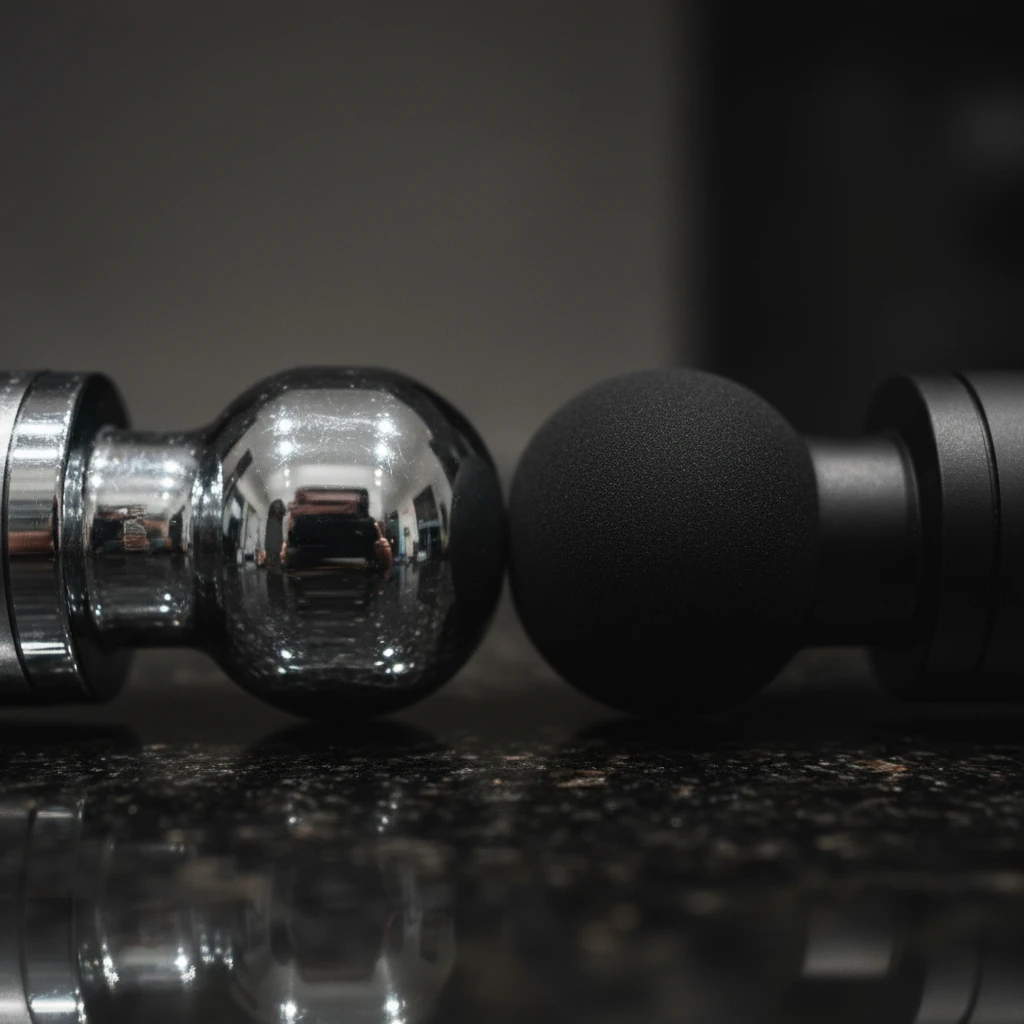
The Theragun Pro Plus delivers the deepest percussion on the market with its industry-leading 16mm amplitude and 60 lbs of stall force. The rotating arm and ergonomic triangle grip make it easy to reach every muscle group solo. If you want maximum depth and smart features, this is the one.
$499
Jump to VerdictThe Hypervolt 2 Pro hits the sweet spot of performance, quiet operation, and price. Its patented QuietGlide technology makes it the quietest pro-level massage gun we have tested, and it is $170 less than the Theragun. For most people, this is the smarter buy.
$329
Jump to VerdictHere is how these two top-tier massage guns stack up on paper. We will break down what these numbers mean in real-world use below.
| Spec | Theragun Pro Plus | Hypervolt 2 Pro |
|---|---|---|
| Price | $499 | $329 |
| Brand | Therabody | Hyperice |
| Stall Force | 60 lbs | ~45 lbs |
| Speed Range | 1,750 – 2,400 PPM | 1,800 – 2,700 PPM |
| Amplitude | 16mm | 14mm |
| Battery Life | ~150 minutes | ~180 minutes |
| Noise Level | Improved but audible | Very quiet (QuietGlide) |
| Weight | 2.2 lbs | 1.8 lbs |
| Attachments | 6 included | 5 included |
| App Integration | Bluetooth, guided routines, force meter | Bluetooth, guided routines, pressure sensor |
| Design | Triangular ergonomic grip, rotating arm | Traditional pistol grip, lightweight |
| Warranty | 2 years | 2 years |
How a massage gun feels in your hand matters just as much as its raw specs. You are going to be holding this thing for 10 to 15 minutes at a time, often after an exhausting workout when your grip is already fatigued.
The Theragun Pro Plus uses Therabody's signature triangular grip design, which is one of the most distinctive features in the massage gun market. Rather than a traditional pistol shape, the triangle offers multiple grip angles. You can hold it like a flashlight, grab it from the top, or grip it from behind, all without changing attachments or contorting your wrist. This is a genuine ergonomic advantage, especially when targeting hard-to-reach areas like your upper back and shoulders.
The rotating arm is another standout feature. It adjusts to four different angles, letting you customize the attack angle without awkwardly repositioning your hand. At 2.2 lbs, the Theragun is the heavier of the two, and you will notice that extra weight during longer sessions. The build quality is excellent though. The soft-touch exterior feels premium, and the overall construction inspires confidence that this device will last for years.
The Hypervolt 2 Pro goes with a more conventional pistol grip design, and honestly, it just works. The grip is slim, textured, and comfortable to hold for extended sessions. At 1.8 lbs, it is noticeably lighter than the Theragun, which reduces hand and arm fatigue during longer recovery sessions. If you plan on using your massage gun for 15 minutes or more at a time, that 0.4 lb difference adds up.
The trade-off is that the pistol grip does not offer the same multi-angle versatility as the Theragun's triangle. Reaching your mid-back solo requires some creative arm positioning. The build quality is solid, with a matte finish that resists fingerprints and a streamlined shape that is easy to pack in a gym bag. It looks and feels like a well-made tool, even if it is not quite as eye-catching as the Theragun's unique silhouette.
This is the core of what makes a massage gun effective. Two specs matter most here: amplitude (how deep the head travels into the muscle) and stall force (how much pressure you can apply before the motor stalls out).
The Theragun Pro Plus is the undisputed king of percussion depth. Its 16mm amplitude means the massage head travels deeper into muscle tissue than any other consumer-grade device on the market. Combined with a stall force of 60 lbs, you can lean into the Theragun with serious pressure and the motor will not flinch. This matters most for athletes with dense, thick muscle groups, think quads, glutes, and upper back, where surface-level percussion simply does not cut it.
The speed range of 1,750 to 2,400 PPM is slightly lower than the Hypervolt's top end, but in practice, the deeper amplitude more than compensates. At its highest setting, the Theragun delivers a deep, thumping percussion that you can feel reaching your deepest muscle fibers. It is not a gentle experience on the top settings, and that is exactly the point.
The Hypervolt 2 Pro is no slouch in the percussion department. Its 14mm amplitude is 2mm less than the Theragun, which translates to slightly shallower penetration depth. For most people and most muscle groups, 14mm is more than adequate. You will only notice the difference on very large, dense muscles where that extra depth would help the percussion reach deeper tissue layers.
Where the Hypervolt fights back is speed. Its top PPM of 2,700 is 300 percussions per minute faster than the Theragun, which gives it a faster, more buzzy feel at max speed. The ~45 lb stall force is lower than the Theragun's 60 lbs, meaning the motor will start to struggle sooner if you press very hard. For general fitness users and even most serious gym-goers, 45 lbs of stall force is plenty. You would need to be deliberately pressing with significant body weight to stall it out.
Noise is one of the most common complaints about percussion massage guns, and it is where these two devices diverge the most.
Therabody has made significant improvements to the Theragun's noise output over the past few generations. The Pro Plus is noticeably quieter than the original Theragun Pro, which sounded like a power drill. That said, it is still the louder of these two devices. On the lower speed settings, it produces a moderate thudding sound that is perfectly fine for home use. At max speed, it gets loud enough that you would probably not want to use it during a Zoom call or while someone is sleeping in the next room.
The noise character is more of a low-frequency thump rather than a high-pitched whine, which most people find less annoying. But there is no getting around the fact that a 16mm amplitude motor driving at 2,400 PPM is going to move some air.
This is the Hypervolt's biggest advantage. Hyperice's patented QuietGlide technology makes the Hypervolt 2 Pro remarkably quiet for a pro-level massage gun. On its lowest setting, you can barely hear it over normal conversation. Even at max speed, it produces a low, smooth hum that is dramatically quieter than the Theragun.
If you live in an apartment with thin walls, travel frequently and want to use your massage gun in hotel rooms, or just value being able to watch TV while recovering, the Hypervolt's noise advantage is significant. It is one of those features that does not show up well in spec comparisons but makes a huge difference in daily usability.
The Theragun Pro Plus delivers approximately 150 minutes of battery life on a full charge. That is roughly 10 to 15 recovery sessions before you need to plug it in, depending on how long your sessions are and which speed settings you use. The battery is internal and charges via USB-C, which is convenient for travel. A full charge takes about two hours.
150 minutes is respectable, but it does fall short of the Hypervolt. If you are using the Theragun multiple times a day, for example a pre-workout warmup and post-workout recovery, you may find yourself charging it every few days.
The Hypervolt 2 Pro edges ahead with approximately 180 minutes of battery life. That extra 30 minutes may not sound like much, but it means roughly two to three additional sessions before needing a charge. The internal rechargeable battery also charges via USB-C.
For people who use their massage gun daily or even twice daily, the Hypervolt's longer battery life is a practical advantage that reduces the frequency of charging. Both devices provide more than enough juice for a single recovery session, so this difference only matters over the course of a week of regular use.
Both devices connect to their respective apps via Bluetooth, and both apps have improved substantially over the past year. But they take slightly different approaches to the smart features.
The Therabody app connects to the Pro Plus over Bluetooth and offers guided recovery routines tailored to specific activities, body areas, and goals. The standout feature is the built-in force meter, which displays in real-time how much pressure you are applying on the app screen. This is genuinely useful because most people either press too lightly (reducing effectiveness) or too hard (risking bruising). The force meter helps you find the sweet spot.
The app also includes wellness protocols for sleep, stress relief, and warm-up routines that go beyond basic muscle recovery. The guided routines walk you through exactly where to place the device, how long to hold each position, and which attachment to use. For someone new to percussive therapy, this is incredibly helpful.
The Hyperice app offers a similar set of guided routines with Bluetooth connectivity. Its key smart feature is the built-in pressure sensor, which provides haptic and visual feedback when you hit the optimal pressure range for each body area. Functionally, it serves the same purpose as the Theragun's force meter, just with a different interface.
Hyperice has also been building out integrations with other fitness platforms and wearables, which makes the app feel more like part of a broader recovery ecosystem rather than a standalone tool. The guided routines are well-produced and easy to follow, with clear instructions and timing cues. Both apps are free to use with their respective devices, with no subscription required.
The Theragun Pro Plus comes with six attachments: a standard ball, dampener, wedge, thumb, cone, and supersoft tip. This is a well-rounded set that covers everything from large muscle groups (ball) to trigger points (thumb and cone) to sensitive areas near bones (supersoft). Therabody also sells additional specialty attachments separately if you want to expand your kit.
The attachment connection system is secure and easy to swap. You simply press and twist to lock an attachment in place. No wobble, no rattle. After months of daily use, the connection mechanism still feels tight and reliable.
The Hypervolt 2 Pro comes with five attachments: a flat head, bullet, fork, cushion, and round ball. This is a solid set, though one fewer than the Theragun. The flat head is great for broad muscle groups, the bullet targets specific knots, and the fork is designed to straddle the spine for safe back work.
The attachment system uses a simple push-on mechanism that is quick and easy but does not feel quite as locked-in as the Theragun's twist system. In practice, attachments stay put during use, but the Theragun's mechanism inspires slightly more confidence. Hyperice also sells additional attachments separately.
Let us get straight to the numbers, because the price gap between these two devices is significant.
| Factor | Theragun Pro Plus | Hypervolt 2 Pro |
|---|---|---|
| Retail Price | $499 | $329 |
| Price Difference | $170 more for Theragun | |
| App / Subscription | Free (no subscription) | Free (no subscription) |
| Warranty | 2 years | 2 years |
| Included Attachments | 6 | 5 |
At $329, the Hypervolt 2 Pro is the better value for most people. It delivers 90% of the Theragun's percussion performance, runs quieter, lasts longer on a single charge, and weighs less. The $170 premium for the Theragun Pro Plus is justified only if you specifically need that extra 2mm of amplitude depth, the higher stall force for very dense muscles, or the rotating arm for solo self-treatment of hard-to-reach areas.
If neither of these fits your budget, both brands offer more affordable options. The Theragun Mini at $199 is a compact, simplified version that still delivers Therabody's percussion quality in a palm-sized form factor. It sacrifices the rotating arm and some amplitude depth, but it is excellent for travel and basic recovery. The Hypervolt Go 2 at $129 is one of the best budget massage guns on the market, offering surprisingly capable performance in a lightweight, travel-friendly body. Either one makes a smart entry point if you are not ready to commit to a pro-level device. For more options, check out our best massage guns roundup.
After months of testing both devices through strength training, running, and mobility work, here is the bottom line:
The Theragun Pro Plus is the best massage gun for serious athletes and power users. If you are a competitive athlete, deal with chronically tight or dense muscles, or want the absolute deepest percussion available in a consumer device, the Theragun's 16mm amplitude and 60 lbs of stall force are unmatched. The rotating arm and triangle grip also make it the best choice if you frequently need to work on your own back and shoulders without a partner's help. You are paying a premium for that capability, but for the right user, it is money well spent.
The Hypervolt 2 Pro is the smarter buy for most people. It costs $170 less, runs significantly quieter, lasts longer on a single charge, and weighs less in your hand. The 14mm amplitude and 45 lbs of stall force are more than enough for the vast majority of fitness enthusiasts, weekend warriors, and even serious gym-goers who do not have extremely dense muscle mass. If you are choosing between these two and you do not have a specific reason to need the Theragun's extra depth, the Hypervolt 2 Pro is where your money goes further.
Either way, both are excellent devices that will meaningfully improve your recovery routine. The days of massage guns being unreliable gimmicks are long gone. These are legitimate, research-backed recovery tools that belong in every home gym alongside your other essential equipment.
The Theragun Pro Plus is worth $499 if you are a serious athlete, physical therapist, or someone who needs maximum percussion depth for dense muscle tissue. Its 16mm amplitude and 60 lbs of stall force are the highest in the consumer market, and the rotating arm design makes it easier to reach your back and shoulders without help. However, if you are a casual fitness user or primarily want a massage gun for general soreness, the Hypervolt 2 Pro delivers excellent performance at $170 less.
The Hypervolt 2 Pro is noticeably quieter than the Theragun Pro Plus. Hyperice's patented QuietGlide technology keeps the Hypervolt operating at a low hum that will not disrupt a conversation or wake anyone in the next room. The Theragun Pro Plus has improved significantly over earlier generations and is quieter than previous Theragun models, but it still produces more audible motor noise, especially at higher speeds. If noise is a top priority, the Hypervolt wins this category clearly.
A massage gun can supplement but not fully replace a professional sports massage. Percussion therapy is excellent for targeting specific muscle groups, reducing post-workout soreness, and improving blood flow. However, a skilled massage therapist can assess your body holistically, adjust technique in real time, and work on areas like joints and connective tissue that a massage gun cannot safely address. For daily maintenance and recovery between sessions, a Theragun or Hypervolt is highly effective. For deeper therapeutic work, a professional is still the gold standard.
Amplitude measures how deep the massage head travels into your muscle tissue with each stroke, measured in millimeters. Higher amplitude means deeper percussion. The Theragun Pro Plus has a 16mm amplitude, while the Hypervolt 2 Pro has 14mm. PPM (percussions per minute) measures how many times the head strikes per minute, which affects the speed and intensity feel. The Hypervolt 2 Pro reaches a higher top speed at 2,700 PPM versus the Theragun's 2,400 PPM. In general, amplitude matters more for deep tissue treatment, while PPM affects surface-level intensity and vibration frequency.
Yes. Both Therabody and Hyperice offer more affordable options within their own lineups. The Theragun Mini at $199 is a compact, portable option that still delivers solid percussion depth with a simplified design. The Hypervolt Go 2 at $129 is one of the best budget massage guns available, offering surprisingly good performance in a lightweight, travel-friendly body. Beyond these two brands, options from brands like Ekrin, Bob and Brad, and Lifepro offer decent percussion therapy in the $100 to $200 range, though they typically lack the build quality and app integration of the premium models.
Our complete ranking of the best percussion massage guns at every price point, from budget picks under $100 to pro-level recovery tools.
How to build a complete, effective home gym setup for under $500, including recovery tools, strength equipment, and smart accessories.
From smart gym systems to classic free weight setups, here are the best home gym options for every budget and training style.