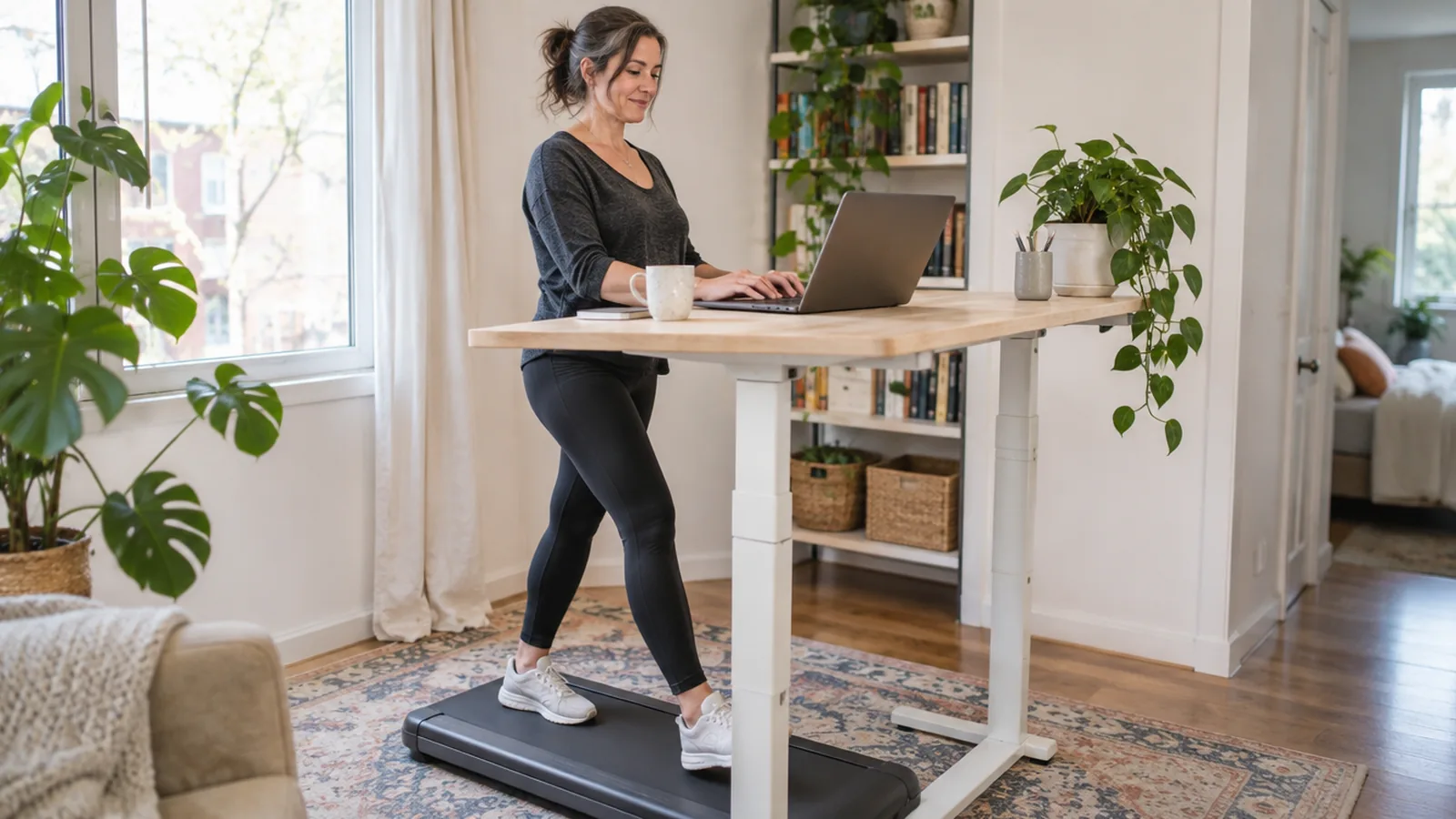
What a walking pad is, and what it is not
A walking pad is a treadmill with the parts you do not need for walking taken off. There are no tall handrails, no big console and usually no incline motor. What is left is a flat deck a few inches high with a belt and a small motor.
That makes it light and easy to store. It also sets clear limits. The belt is shorter and narrower than on a full treadmill, the motor is smaller, and most models stop around 4 mph. That is a brisk walk, not a jog.
So the honest question is not "which walking pad is best". It is "will I only ever walk on it". If yes, a pad saves space and money. If you think you might want to run in six months, skip ahead to the section on folding treadmills.
Speed: the limit that decides everything
A normal brisk walk fits well inside a 4 mph limit. Desk walking is slower still, because typing while you move fast is hard. So for walking, the limit rarely bites.
Walking does burn real energy. Harvard Health lists about 133 calories for 30 minutes at 3.5 mph for a 155 pound person, and 175 calories at 4 mph. That is not a hard workout, but an hour a day adds up over a week. The bigger win for many people is simply sitting less.
Footprint: what actually fits
This is where walking pads shine. A full treadmill needs a long, wide space and room behind it for safety. A pad is a flat rectangle you can push under a bed or stand on end in a corner.
| Model | Price (Nov 2026) | Top speed | Max user weight | Size in use | Storage |
|---|---|---|---|---|---|
| WalkingPad C2 | about $599 | 3.7 mph | 220 lb | 57 x 20 in | folds in half to 32 x 20 in |
| UREVO SpaceWalk 5L | about $253 on sale, $400 list | 4.0 mph | 400 lb advertised, 300 lb in manual | 49 x 20 in | slides flat under furniture |
| LifeSpan TR1200 | about $1,199 | 4.0 mph | 330 to 350 lb, by version | 61 x 28 in | stays put, about 78 lb |
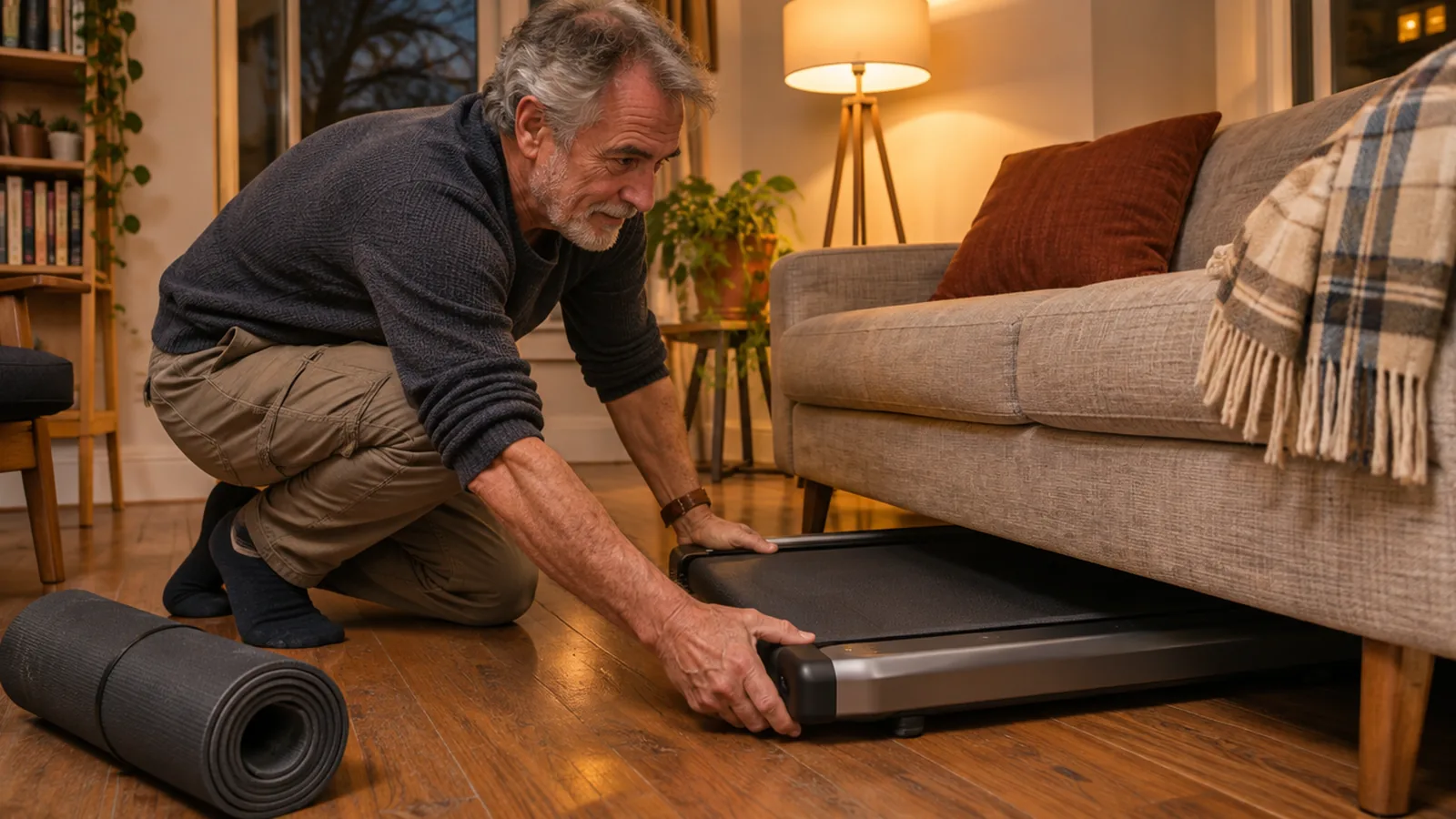
WalkingPad C2. The classic folding pad. It halves to about 32 by 20 inches, which is the smallest storage size here. Garage Gym Reviews notes the downsides: speeds above 1.9 mph need the app, manual mode changes speed in 0.5 mph steps, and the 220 pound limit is low. Buy it if storage is your number one problem and you are a lighter walker.
UREVO SpaceWalk 5L. The value pick on paper. It reaches 4 mph, adds an auto incline up to 9 percent and weighs about 51 pounds. UREVO advertises 400 pounds, but an independent spec tracker found the manual rates it at 300 pounds. We would trust the manual.
LifeSpan TR1200. The desk walker's pad. It is bigger, heavier and pricier, but it is made to sit under a standing desk and is rated far higher than the C2. At about 78 pounds and 61 inches long, it is not something you move every day, so plan a spot where it can live.
Noise and neighbors
There are two kinds of noise. Motor hum is airborne and stays mostly in your room. Footfall is structural: each step sends a small thump into the floor and down into the ceiling below.
That test was on one budget pad, but the pattern is the same for all of them: you add more noise than the motor does. Floors matter too. A concrete slab passes very little vibration, while a wood joist floor in an older building passes much more.
What helps:
- A dense rubber mat under the whole pad. This is the single best fix.
- Walking softly, heel to toe, at a steady pace. Stomping at top speed is the loudest thing you can do.
- Keeping desk walks to daytime hours if you live above someone.
- Checking bolts and belt tension every few months. Loose parts rattle.
Weight limits and safety
Product pages love big numbers. Manuals are more careful. When the two disagree, go with the manual, and leave a margin. A pad used near its limit every day will wear out its motor and belt faster.
Before you buy, check this:
- You only want to walk, not run
- Max user weight in the manual is at least 50 lb above your weight
- Storage height fits under your sofa or bed
- A dense rubber mat is in your budget
- You can lift or roll about 50 to 80 lb
- The model is not on a safety warning list
That last point is real. In April 2026 the Consumer Product Safety Commission told owners to stop using Sperax walking pads and treadmills (models Pro, Q1, RM-01 and RM-02). It cited sudden speed changes and stops, plus 573 reports of overheating, fires and other thermal incidents. The importer did not agree to a recall. If you see a very cheap pad from a brand you cannot find much about, check the commission's site first.
If you have balance problems, joint issues or a heart condition, talk to your doctor before you start daily walking on a moving belt. Most pads have no handrail, so you need steady footing.
Who should get a real treadmill instead
A walking pad is the wrong tool for some people. Get a full folding treadmill if any of this sounds like you:
- You want to jog or run, even sometimes. Pads stop around 4 mph. A model like the NordicTrack T Series 5 goes to 10 mph and lists for about $599, the same as a WalkingPad C2.
- You want real incline training. The T Series 5, for example, goes up to 10 percent.
- You weigh more than most pads are rated for in their manuals.
- You want handrails for balance.
The trade-off is space. A treadmill is longer, taller and louder when you run on it. In a top floor flat with neighbors below, running is the one thing that will cause trouble no matter what mat you buy. If you need cardio that is quiet and compact, also look at a bike or rower in our apartment home gym guide.
Our verdict
For most people in small apartments, a walking pad with a 4 mph top speed, an honest weight rating and a good mat is enough. The UREVO SpaceWalk 5L gives the most features for the money at its November 2026 sale price. The WalkingPad C2 is the pick if storage is tight and you are under its weight limit. The LifeSpan TR1200 is for people who will walk for hours every workday and want something built for that.
If you are still deciding how much room you have, start with our home gym space guide. If Black Friday is pushing you to buy now, read our Black Friday buying guide first. And if you want a full setup on a budget, see our home gym under $500.
Questions people ask
Not really. Most walking pads top out around 3.7 to 4 mph, which is a fast walk. Some newer models claim higher speeds, but the short belt and small motor are built for walking. If you want to run, buy a treadmill.
It can. The motor is fairly quiet, but each step sends vibration through the floor. A dense rubber mat under the whole pad, a steady pace and daytime use help most. Concrete floors pass much less vibration than wood joist floors.
In use, most pads take about 4 to 12 square feet. Stored, a folding model like the WalkingPad C2 shrinks to about 32 by 20 inches. Leave some clear space behind the pad in case you step off the back.
It is light to moderate exercise. Harvard Health estimates about 133 calories in 30 minutes at 3.5 mph for a 155 pound person. The main benefit is breaking up long stretches of sitting.
Sources
- Harvard Health: calories burned in 30 minutes for people of three different weights
- Garage Gym Reviews: WalkingPad C2 review
- UREVO SpaceWalk 5L product page
- OCDevel: UREVO SpaceWalk 5L specs and manual rating
- TechRadar: LifeSpan TR1200-DT3 review
- OutdoorGearLab: walking pad sound test
- CPSC warning on Sperax walking pads and treadmills (2026)
- UREVO: are walking pads loud?
- NordicTrack T Series 5 at Lowe's